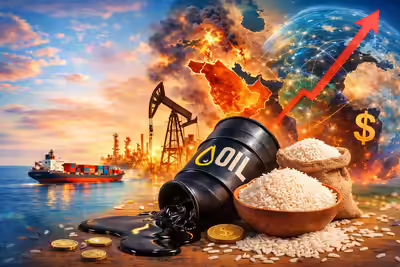
Global oil markets react to Middle East developments as rising geopolitical tensions in the region, particularly around the Strait of Hormuz, create uncertainty in energy supply and pricing. These developments are closely watched by major economies, including India, due to their heavy dependence on crude oil imports.
Why Middle East Developments Matter for Oil Markets
The Middle East plays a crucial role in global energy supply.
Key Reasons:
- Supplies a significant share of the world’s crude oil
- Hosts major oil-producing countries like Saudi Arabia and Iran
- Strategic shipping routes like the Strait of Hormuz
Any instability in this region can quickly impact global oil prices.
Recent Market Reactions
Global oil markets have shown volatility following recent developments:
- Crude oil prices fluctuate due to supply concerns
- Traders respond to geopolitical risks and uncertainties
- Increased speculation in international energy markets
- Short-term price spikes followed by corrections
These reactions highlight the sensitivity of oil markets to geopolitical events.
Impact on Global Economy
The situation where Global oil markets react to Middle East developments has widespread economic implications:
- Rising fuel prices across countries
- Increased transportation and logistics costs
- Inflationary pressure on economies
- Impact on industries dependent on oil
Developing countries are particularly vulnerable to such fluctuations.
Impact on India
For India, the effects are significant:
- Higher import bills for crude oil
- Possible increase in petrol and diesel prices
- Pressure on inflation and fiscal balance
- Government monitoring and policy adjustments
India’s energy security strategy becomes crucial during such times.
Global Response and Outlook
Countries and organizations are responding cautiously:
- Strategic reserves may be utilized if needed
- Diplomatic efforts to stabilize the region
- Monitoring of shipping routes and supply chains
- Diversification of energy sources
Experts suggest that continued tensions could lead to prolonged market volatility.
Conclusion
The development that Global oil markets react to Middle East developments underscores the interconnected nature of geopolitics and global economics. Stability in the Middle East remains essential to ensure steady energy supplies and economic balance worldwide.