New Delhi, April 21, 2026:
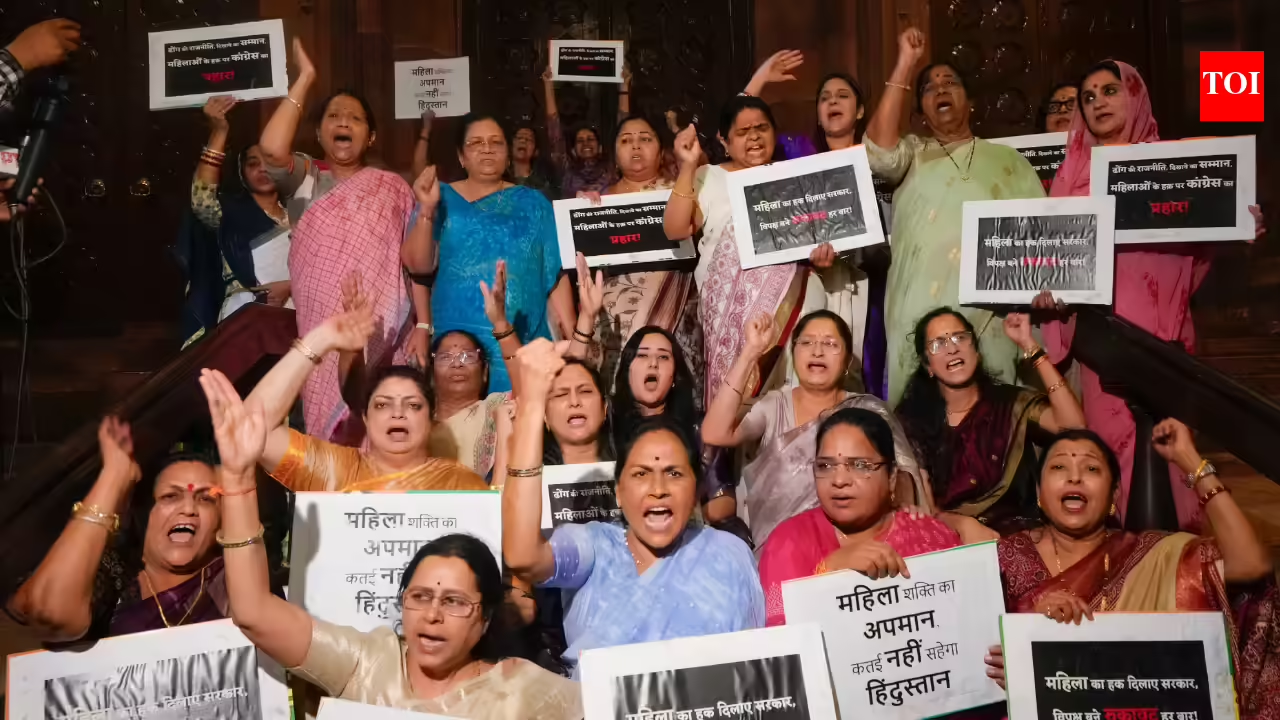
Debate over Women’s Reservation Bill continues to gain momentum across political circles, with leaders and policymakers expressing varied opinions on its implementation, scope, and long-term impact on governance. The proposed legislation, popularly known as the Women’s Reservation Bill, aims to reserve 33% of seats for women in the Lok Sabha and State Legislative Assemblies.
The bill has sparked intense discussions among political parties, with some strongly advocating for its immediate implementation, while others have raised concerns regarding provisions such as sub-quotas and delimitation processes.
Support for Greater Women Representation
Several leaders, including Narendra Modi, have reiterated their support for increasing women’s participation in politics. Proponents argue that the bill is a crucial step toward gender equality and inclusive governance in India.
Supporters believe that greater representation of women in legislative bodies will lead to more balanced policymaking and stronger focus on issues such as education, healthcare, and social welfare.
Concerns and Political Differences
Opposition parties and some regional leaders have raised concerns about the timing and structure of the bill. Key issues under debate include the demand for reservations within the quota for marginalized communities and clarity on the timeline for implementation.
Critics also argue that without addressing structural challenges within political parties, the bill alone may not ensure effective participation of women in decision-making processes.
Public Discourse and Way Forward
The ongoing debate has extended beyond Parliament, with civil society groups, activists, and citizens actively participating in discussions. The bill has become a focal point for conversations around gender justice and political reform.
Experts suggest that consensus-building among stakeholders will be essential for the successful passage and implementation of the legislation.
As the debate over Women’s Reservation Bill continues, it remains a significant step in shaping the future of democratic representation and gender equality in India.