India-UK Partnership Gains Momentum in Critical Minerals Sector
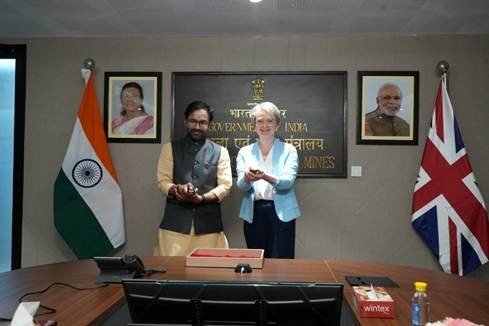
India and the United Kingdom have jointly launched the Critical Minerals Global Supply Chain Observatory, a major initiative aimed at strengthening India’s capabilities in securing and managing critical mineral supply chains. The move marks a significant step in deepening bilateral cooperation in the strategic minerals sector, which is increasingly vital for clean energy technologies, advanced manufacturing, and national security.
Moreover, the initiative reflects the growing importance of critical minerals in supporting global economic growth and technological innovation. Both countries aim to enhance supply chain resilience and reduce vulnerabilities arising from disruptions in global markets.
Observatory to Strengthen Supply Chain Intelligence
The newly launched observatory will serve as a knowledge and analytical platform for monitoring global critical mineral supply chains. It is expected to provide valuable insights into production trends, trade flows, market risks, and emerging opportunities.
Furthermore, the platform will help policymakers, researchers, and industry stakeholders make informed decisions regarding resource security and strategic investments.
As a result, India will gain access to advanced data and analytical tools that can support long-term planning in the critical minerals sector.
Why Critical Minerals Matter
Critical minerals such as lithium, cobalt, nickel, graphite, and rare earth elements play a crucial role in modern industries. They are essential components in electric vehicle batteries, renewable energy systems, semiconductors, telecommunications equipment, and defense technologies.
Additionally, the global transition toward clean energy has significantly increased demand for these minerals. Countries around the world are therefore seeking reliable and diversified supply chains to secure future requirements.
Consequently, critical mineral security has become a major strategic priority for governments and industries alike.
Supporting India’s Green Energy Ambitions
India’s ambitious renewable energy and electric mobility goals depend heavily on access to critical minerals. The country is rapidly expanding its clean energy infrastructure and battery manufacturing capabilities to support its transition toward a low-carbon economy.
Moreover, securing a stable supply of critical minerals is essential for achieving long-term sustainability targets and reducing dependence on imports.
The observatory is expected to help India identify potential supply risks and develop strategies to strengthen domestic capabilities.
Enhancing Bilateral Cooperation
The launch of the observatory highlights the growing strategic partnership between India and the United Kingdom. Both nations have been expanding cooperation in areas such as trade, technology, innovation, climate action, and sustainable development.
Furthermore, collaboration in the critical minerals sector aligns with broader efforts to strengthen economic ties and promote resilient supply chains.
As a result, the initiative is expected to create new opportunities for joint research, investment, and industrial partnerships.
Building Resilient Global Supply Chains
Recent geopolitical developments and supply chain disruptions have exposed vulnerabilities in global mineral markets. Many countries are now focusing on diversifying supply sources and improving transparency across critical resource networks.
In addition, international cooperation is increasingly viewed as essential for ensuring stable access to strategic minerals.
Therefore, the India-UK observatory aims to contribute to global efforts to build secure, transparent, and resilient supply chains for critical resources.
Opportunities for Industry and Research
The observatory is expected to benefit businesses, researchers, and policymakers by providing reliable data and market intelligence. Companies involved in mining, manufacturing, renewable energy, and technology sectors can use these insights to assess risks and identify investment opportunities.
Moreover, academic institutions and research organizations may leverage the platform to support innovation and policy development.
Consequently, the initiative could play a key role in strengthening India’s critical minerals ecosystem.
Conclusion
The launch of the Critical Minerals Global Supply Chain Observatory by India and the United Kingdom marks an important milestone in strategic resource cooperation. By improving supply chain intelligence, enhancing resilience, and supporting informed decision-making, the initiative aims to strengthen India’s capabilities in a sector that is increasingly vital to economic growth and technological advancement.
Moreover, as demand for critical minerals continues to rise globally, partnerships such as this will play a crucial role in ensuring resource security and supporting the transition to a sustainable future.