Delimitation Proposal Sparks Political Storm Across India
The proposed Delimitation Bill 2026 has emerged as one of the most debated political issues in the country, triggering intense discussions among political parties, constitutional experts, and state governments. The bill seeks to pave the way for a fresh delimitation exercise, which would redraw parliamentary and assembly constituencies based on updated population data and potentially increase the number of seats in the Lok Sabha.
Supporters argue that the move is necessary to ensure fair representation in line with demographic changes, while critics fear it could alter the balance of political power between states and reshape India’s federal structure.
What Is the Delimitation Bill 2026?
The Delimitation Bill 2026 seeks to establish the framework for conducting a nationwide delimitation exercise after decades of frozen seat allocation. The proposal is linked to broader reforms that include increasing the number of Lok Sabha seats and facilitating the implementation of women’s reservation in legislatures.
According to proposals discussed in Parliament, the number of Lok Sabha seats could increase significantly, with some versions suggesting an expansion from 543 seats to as many as 850 seats.
The exercise would redraw constituency boundaries and redistribute seats based on population figures, making it one of the most consequential electoral reforms since Independence.
Why Is the Bill Controversial?
The biggest source of controversy is the possibility that states with faster population growth could gain a larger share of parliamentary seats, while states that successfully controlled population growth may see their relative political influence decline.
Several southern states, including Tamil Nadu and Kerala, have expressed concerns that they could lose influence in national decision-making despite achieving better demographic outcomes over the past few decades. Critics argue that such a shift could effectively penalize states that implemented successful population-control policies.
The debate has therefore expanded beyond electoral boundaries and become a larger discussion about federalism and equitable representation.
Government Defends the Proposal
The central government has rejected allegations that the bill would disadvantage any region. Union Home Minister Amit Shah has stated that no injustice will be done to any state and argued that southern states would ultimately benefit from the proposed increase in parliamentary seats.
Supporters of the bill contend that population-based representation is a fundamental democratic principle and that constituency boundaries must be updated periodically to reflect demographic realities.
They also argue that larger representation could improve governance by reducing the size of constituencies and enhancing voter engagement.
Link to Women’s Reservation Adds Complexity
The delimitation debate became even more contentious because it was linked to proposals aimed at implementing one-third reservation for women in Parliament and state assemblies. The government argued that constituency restructuring was necessary to facilitate women’s reservation without disrupting existing seat allocations.
Opposition parties, however, accused the government of tying two separate issues together. Several leaders argued that women’s reservation should be implemented independently rather than being made dependent on delimitation.
This disagreement became one of the key flashpoints during parliamentary discussions.
Opposition Voices Concerns
Opposition parties have raised concerns regarding the timing, methodology, and political implications of the proposed exercise. Critics argue that delimitation based on older census figures could create distortions and that broader consensus is needed before undertaking such a major restructuring of India’s electoral map.
Regional parties from southern states have been particularly vocal, warning that the exercise could alter long-standing political balances and reduce their influence in the Lok Sabha.
The debate has highlighted the challenge of balancing democratic representation with federal considerations.
Bill Faces Parliamentary Setback
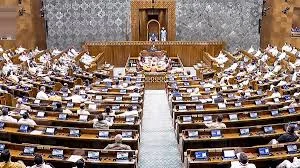
The controversy ultimately contributed to significant resistance in Parliament. The related constitutional amendment proposal linked to women’s reservation failed to secure the required two-thirds majority in the Lok Sabha, leading to the shelving of the Delimitation Bill 2026 for the time being.
However, political observers believe the issue is unlikely to disappear and may return to Parliament in a revised form in the future.
Given the constitutional requirement for future delimitation, discussions are expected to continue in the coming years.
Why Delimitation Matters for India’s Democracy
Delimitation is intended to ensure that elected representatives reflect population changes and that citizens enjoy relatively equal representation in legislative bodies. The exercise has historically been carried out after censuses to maintain the principle of “one person, one vote, one value.”
Supporters believe updated constituency boundaries can strengthen democracy and improve governance, while critics emphasize the need to protect regional interests and maintain the federal balance that underpins India’s political system.
Conclusion
The Delimitation Bill 2026 has ignited one of India’s most important constitutional and political debates in recent years. While supporters view it as a necessary step toward fairer representation and electoral reform, opponents fear it could reshape the country’s political landscape and alter the balance of power among states.
Although the bill has been temporarily shelved, the questions it raises about representation, federalism, population policy, and democratic governance are likely to remain central to India’s political discourse for years to come.