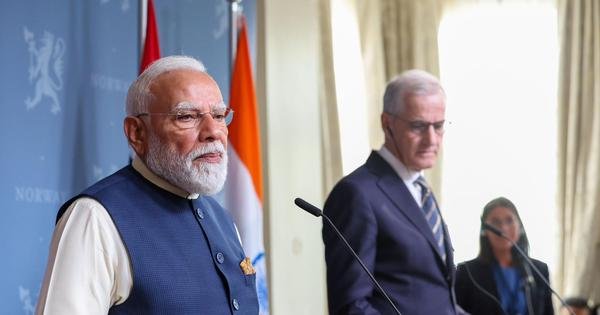
Prime Minister Narendra Modi avoided taking questions from the media during a joint appearance with Norwegian Prime Minister Jonas Gahr Støre, prompting discussions about press interactions and political communication styles between different democracies.
The issue gained attention after journalists at the bilateral event expected a question-and-answer session following official talks between the leaders. However, no questions were taken from the press during the appearance, continuing a pattern seen during several high-level diplomatic engagements involving Prime Minister Modi.
When asked about the absence of media questions, Norwegian Prime Minister Jonas Gahr Støre responded by saying that countries follow “different traditions” regarding press conferences and media interaction formats. His remarks were widely interpreted as a diplomatic response aimed at respecting differences in political and communication practices between nations.
The bilateral meeting between India and Norway focused on strengthening cooperation in areas such as green energy, climate action, maritime partnerships, technology, trade, and Arctic collaboration. Both leaders discussed opportunities to deepen strategic ties and expand economic engagement between the two countries.
Despite the diplomatic focus of the meeting, media attention shifted toward the issue of press freedom and transparency after the event concluded without journalist interaction. Opposition leaders and critics in India pointed to the incident as part of a broader debate over media accessibility and accountability in political leadership.
Supporters of Prime Minister Modi, however, argued that government communication today takes place through multiple platforms including official statements, digital outreach, interviews, and public addresses. They also noted that diplomatic events often follow pre-decided formats based on mutual agreements between participating governments.
The phrase “different traditions” used by Prime Minister Støre quickly became a topic of discussion on social media and in political circles. Many users interpreted the statement as a subtle acknowledgment of differing approaches toward media engagement in India and European democracies.
Press conferences involving world leaders are often considered an important aspect of democratic accountability, allowing journalists to directly question political leaders on policy issues, governance, and international relations. Critics argue that limiting unscripted media interactions reduces transparency and public scrutiny.
At the same time, diplomatic experts noted that international bilateral visits frequently prioritize official discussions and strategic outcomes over extended press interactions. They emphasized that communication protocols vary significantly between governments and political systems.
India and Norway continue to maintain strong bilateral relations, particularly in renewable energy, shipping, fisheries, climate cooperation, and sustainable development initiatives. The latest meeting between the two leaders reaffirmed mutual interest in strengthening economic and strategic partnerships.
While the diplomatic agenda remained the central focus of the visit, the absence of a media Q&A session once again reignited public debate over political communication styles, press access, and democratic engagement in modern governance.