Major Setback for Trinamool Congress
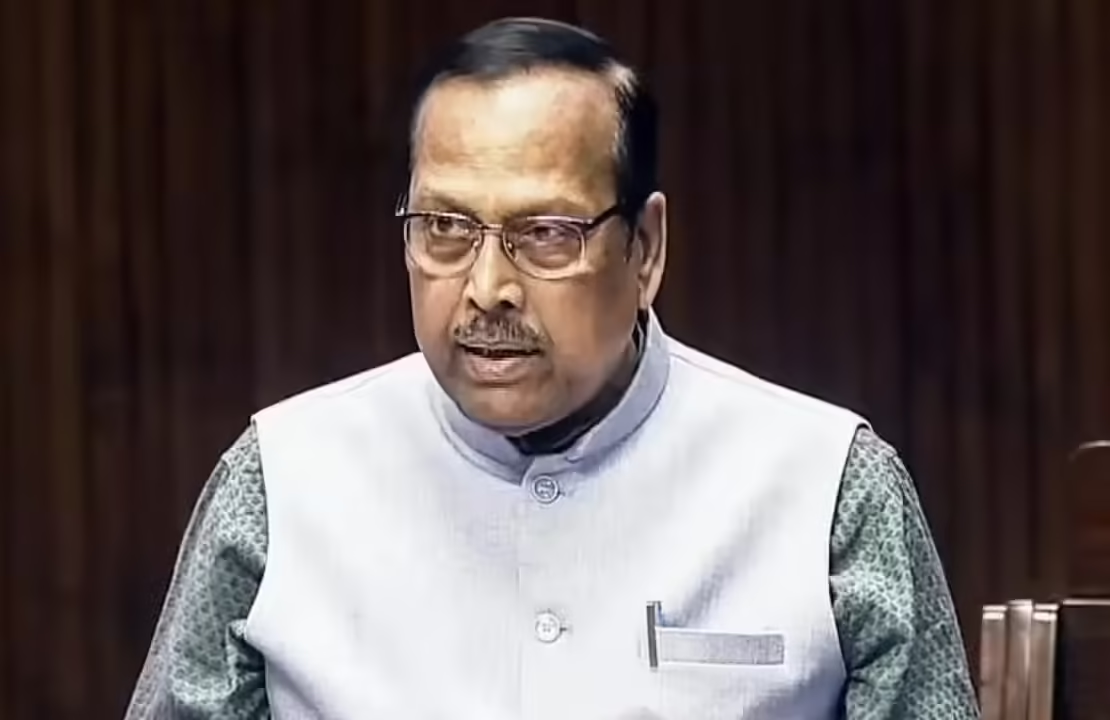
In a significant political development, senior Trinamool Congress (TMC) leader and Rajya Sabha MP Sukhendu Sekhar Roy has resigned from both the party and his membership of the Rajya Sabha. The resignation comes at a time when the party is facing growing internal challenges and speculation about dissent within its ranks.
Moreover, Roy’s departure is being viewed as a major blow to the party leadership, especially as it coincides with important opposition discussions at the national level.
Resignation Submitted in Delhi
According to reports, Sukhendu Sekhar Roy personally submitted his resignation from the Rajya Sabha to the Vice President and Chairman of the Upper House in New Delhi. He subsequently informed party chief Mamata Banerjee about his decision through a formal communication.
Furthermore, the resignation took place while Mamata Banerjee was in Delhi for key political meetings, adding to the significance of the development.
Internal Dissent Had Been Visible
Political observers note that Roy had recently hinted at dissatisfaction within the party’s parliamentary ranks. In recent statements, he suggested that unrest among MPs could emerge following the rebellion witnessed among certain party legislators.
Additionally, his remarks had fueled speculation about growing divisions within the party’s organizational structure and leadership dynamics.
As a result, his resignation is being seen as part of a broader period of uncertainty within the Trinamool Congress.
TMC Faces a Challenging Phase
The resignation comes amid a series of developments that have highlighted internal tensions within the party. In recent weeks, several leaders have either resigned from party positions or publicly expressed dissatisfaction with the party’s direction.
Moreover, reports indicate that the party leadership has been actively trying to maintain unity among its MPs and legislators amid concerns over possible defections.
Consequently, Roy’s exit has intensified discussions about the future political strategy of the party.
Political Significance of the Move
Sukhendu Sekhar Roy has been one of the prominent voices of the Trinamool Congress in Parliament and has represented West Bengal in the Rajya Sabha for several years. His resignation from both the party and Parliament marks a significant political shift.
Furthermore, analysts believe the development could have implications for the party’s parliamentary strength and internal cohesion, particularly at a time when opposition parties are attempting to redefine their political strategies.
What Happens Next?
The immediate focus will now be on whether other leaders follow a similar path and how the Trinamool Congress leadership responds to the growing signs of dissent. Political observers will also closely watch any future announcements regarding Roy’s political plans.
Meanwhile, the party is expected to intensify efforts to prevent further defections and maintain organizational stability.
Conclusion
The resignation of Rajya Sabha MP Sukhendu Sekhar Roy from both the Trinamool Congress and Parliament marks one of the most significant political developments in West Bengal’s recent political landscape. His departure comes amid ongoing internal challenges within the party and could influence future political alignments.
Moreover, as the political situation continues to evolve, attention will remain focused on the response of the TMC leadership and the broader impact of the resignation on the party’s future course.