India’s Global Standing Witnesses Significant Rise
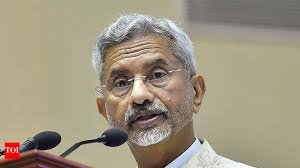
External Affairs Minister Dr. S. Jaishankar has highlighted India’s major foreign policy achievements over the past 12 years, emphasizing the country’s growing influence on the global stage under Prime Minister Narendra Modi’s leadership. He noted that India’s diplomatic outreach, strategic partnerships, and proactive engagement with the international community have significantly enhanced the nation’s global standing.
Moreover, Jaishankar stated that India’s foreign policy has evolved to become more confident, people-centric, and focused on advancing national interests while contributing to global stability and development.
Strengthening Strategic Partnerships Worldwide
One of the key achievements highlighted by the External Affairs Minister was the expansion of India’s strategic partnerships with major global powers and regional partners. Over the years, India has deepened cooperation with countries across North America, Europe, the Indo-Pacific, the Middle East, Africa, and Latin America.
Furthermore, these partnerships have strengthened collaboration in areas such as trade, defense, technology, energy, education, and innovation.
As a result, India’s diplomatic footprint has expanded significantly across multiple regions.
Leadership in the Indo-Pacific Region
Jaishankar emphasized India’s growing role in the Indo-Pacific, describing the region as central to global economic and strategic developments. India has actively promoted a free, open, inclusive, and rules-based Indo-Pacific framework through partnerships and multilateral engagements.
Additionally, initiatives involving maritime security, connectivity, and regional cooperation have reinforced India’s position as a key stakeholder in the region.
Therefore, the Indo-Pacific has emerged as a major pillar of India’s foreign policy strategy.
Successful G20 Presidency and Global Engagement
India’s successful presidency of the G20 was cited as a major diplomatic milestone. Under India’s leadership, the G20 focused on inclusive growth, sustainable development, digital transformation, climate action, and the concerns of developing nations.
Moreover, the inclusion of the African Union as a permanent member of the G20 was widely regarded as a significant achievement reflecting India’s commitment to the Global South.
Consequently, India’s leadership role in international forums received broad recognition.
Voice of the Global South
The External Affairs Minister highlighted India’s efforts to amplify the concerns and aspirations of developing countries. Through initiatives such as the Voice of Global South Summit, India has sought to ensure that the perspectives of emerging and developing economies receive greater attention in global decision-making processes.
Furthermore, India’s development partnerships, capacity-building programs, and humanitarian assistance have strengthened ties with countries across Asia, Africa, Latin America, and the Pacific.
As a result, India has emerged as a leading advocate for the interests of the Global South.
Enhancing Diaspora Engagement
Jaishankar also noted the government’s efforts to strengthen engagement with the Indian diaspora worldwide. Consular services, emergency assistance, and community outreach initiatives have been expanded to support Indian citizens living abroad.
Additionally, the government has conducted several large-scale evacuation and repatriation operations during international crises, demonstrating its commitment to the welfare of overseas Indians.
Therefore, people-centric diplomacy has become an important feature of India’s foreign policy.
Expanding Economic and Trade Diplomacy
Economic diplomacy has played a crucial role in advancing India’s national interests. The government has pursued trade agreements, investment partnerships, and economic cooperation initiatives aimed at supporting growth and attracting global investment.
Moreover, India’s emergence as a major manufacturing and technology destination has strengthened its position in global supply chains.
Consequently, economic engagement has become an increasingly important component of diplomatic relations.
Security and Counter-Terrorism Cooperation
The Minister highlighted India’s efforts to strengthen international cooperation against terrorism and transnational security threats. Bilateral and multilateral partnerships have been expanded to address challenges related to security, cyber threats, and organized crime.
Furthermore, India has consistently advocated zero tolerance toward terrorism on international platforms.
As a result, security cooperation remains a key pillar of the country’s external engagement.
Advancing the Vision of Viksit Bharat
According to Jaishankar, foreign policy plays a vital role in supporting India’s long-term vision of becoming a developed nation by 2047. International partnerships, technology collaboration, investment flows, and global market access are expected to contribute significantly to this objective.
Moreover, diplomacy is increasingly aligned with national development priorities and economic transformation goals.
Therefore, foreign policy is being viewed as an important instrument for achieving Viksit Bharat.
Conclusion
External Affairs Minister S. Jaishankar’s overview of India’s foreign policy achievements over the past 12 years highlights the country’s growing global influence, expanded strategic partnerships, and proactive international engagement. From leadership in the Indo-Pacific and the G20 to advocacy for the Global South and strengthened diaspora relations, India has sought to position itself as a responsible and influential global actor.
Moreover, as the country pursues the vision of Viksit Bharat 2047, foreign policy is expected to remain a critical tool for advancing national interests, economic growth, and international cooperation.