The Russia-Ukraine war continues to reshape global politics, energy markets, and international security as fresh developments emerged this week. Ukraine reportedly launched another drone strike on Russia’s Tuapse oil refinery near the Black Sea, triggering a massive fire and forcing local evacuations. The attack highlights Kyiv’s growing strategy of targeting Russian energy infrastructure to weaken Moscow’s economic and military capabilities.
According to reports, Russian authorities condemned the strike, calling it an attack on civilian infrastructure and accusing Ukraine of escalating the conflict further. However, Ukrainian officials defended the operation, stating that oil refineries and energy facilities play a direct role in financing Russia’s military operations. Over the past year, Ukraine has increasingly used long-range drones to hit strategic Russian targets far from the battlefield, including fuel depots, refineries, and military logistics centers.
The Tuapse refinery is considered an important energy asset for Russia due to its location near the Black Sea. Fires and disruptions at such facilities can impact fuel supplies, export operations, and military transportation. The latest strike also raised concerns about regional security and the possibility of broader escalation in the war.
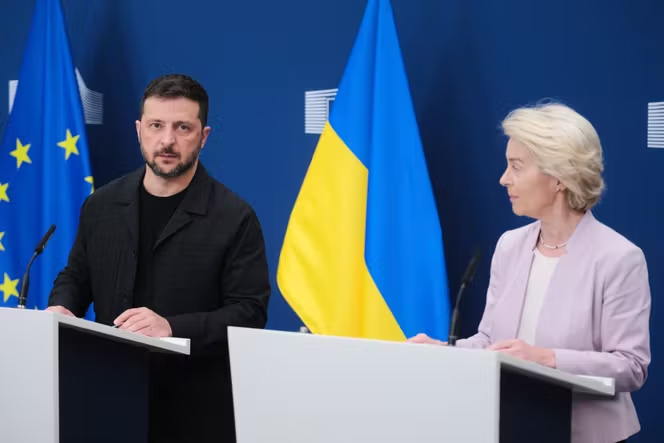
At the same time, the European Union has stepped up its support for Ukraine by approving a massive €90 billion financial assistance package. European leaders said the funding is aimed at strengthening Ukraine’s economy, military preparedness, infrastructure recovery, and humanitarian operations. Along with the aid package, the EU also introduced a new sanctions package targeting Russian banks, energy companies, and networks accused of helping Russia bypass existing restrictions.
The sanctions are designed to increase economic pressure on Moscow while limiting its ability to fund military operations. European officials emphasized that the measures are necessary to maintain support for Ukraine and defend European security interests. Since the war began in 2022, Western nations have imposed several rounds of sanctions on Russia, affecting trade, banking, technology access, and energy exports.
Meanwhile, global military spending has reached a record high in 2025, according to data released by the Stockholm International Peace Research Institute (SIPRI). Analysts say the Russia-Ukraine war, along with rising tensions in the Middle East and Asia, has accelerated defense spending worldwide. Many countries are increasing investments in weapons systems, drones, cyber defense, and military modernization programs.
The ongoing war has also continued to impact global energy prices, food supplies, and diplomatic relations. Oil markets remain sensitive to attacks on Russian energy infrastructure, while European countries continue efforts to reduce dependence on Russian fuel. Security experts warn that prolonged conflict could further destabilize international markets and deepen geopolitical divisions.
As fighting continues, diplomatic efforts to negotiate peace remain limited. Both Russia and Ukraine continue to strengthen military positions while international powers closely monitor developments. The conflict has now become one of the most significant geopolitical crises of the modern era, influencing global economics, security alliances, and international diplomacy on an unprecedented scale.