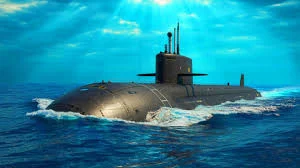
India is facing a major strategic challenge in strengthening its submarine fleet as growing security concerns in the Indo-Pacific region increase pressure on the country’s naval modernization plans. Defence experts describe the situation as India’s “twin submarine dilemma” — balancing the urgent need for both conventional attack submarines and nuclear-powered submarines while dealing with budget, technology, and production limitations.
The Indian Navy has been pushing for rapid submarine expansion to counter increasing maritime activity by regional rivals, especially in the Indian Ocean Region. China’s expanding naval presence and Pakistan’s growing underwater warfare capabilities have intensified concerns over India’s current submarine strength and long-term maritime preparedness.
India currently operates a mix of diesel-electric submarines and nuclear-powered submarines, but many conventional submarines in the fleet are aging and nearing retirement. Naval experts warn that delays in replacement programs could create operational gaps in India’s underwater combat capabilities over the next decade.
One major challenge involves the long-pending Project-75I program, aimed at building advanced conventional submarines equipped with air-independent propulsion systems. The project has faced repeated delays related to technology transfer, cost negotiations, and partnership agreements with foreign defence manufacturers. The delays have slowed the Navy’s efforts to modernize its conventional submarine fleet.
At the same time, India is also prioritizing the development of indigenous nuclear-powered submarines as part of its long-term strategic deterrence program. Nuclear submarines are considered essential for extended underwater operations, strategic deterrence, and maintaining dominance in deep-sea missions. However, these submarines require highly advanced technology, massive investment, and long development timelines.
The “twin dilemma” arises because both submarine programs demand substantial financial resources and industrial capacity simultaneously. Defence planners must decide how to allocate limited budgets between immediate operational requirements and long-term strategic goals.
India’s indigenous defence manufacturing ambitions further complicate the situation. The government is promoting self-reliance in defence production under the “Make in India” initiative, encouraging domestic shipyards and defence companies to play a larger role in submarine construction. However, developing advanced underwater warfare technology domestically remains a highly complex process requiring international cooperation and technical expertise.
Strategic analysts believe the submarine issue has become increasingly urgent due to evolving geopolitical dynamics in the Indo-Pacific region. China has significantly expanded its naval capabilities, including nuclear and conventional submarines, while increasing deployments in the Indian Ocean. Pakistan has also upgraded its submarine fleet with support from foreign defence partners.
The Indian Navy has repeatedly emphasized that submarines are critical for sea denial operations, intelligence gathering, surveillance, and strategic deterrence. Experts argue that without rapid modernization, India could face difficulties maintaining underwater superiority in the region.
In recent years, India has focused on strengthening maritime security partnerships with countries such as the United States, France, Australia, and Japan. These partnerships include naval exercises, technology cooperation, and defence coordination aimed at improving maritime preparedness.
Despite the challenges, the Indian government continues to invest heavily in naval modernization, indigenous defence manufacturing, and strategic deterrence capabilities. Several new naval projects are currently under development, including additional nuclear-powered submarines and advanced conventional platforms.
India’s submarine modernization plans are expected to play a crucial role in shaping the country’s future maritime strategy and its ability to secure national interests in the Indo-Pacific. The coming years will likely determine how effectively India can balance immediate operational demands with long-term strategic ambitions under its complex twin submarine challenge.