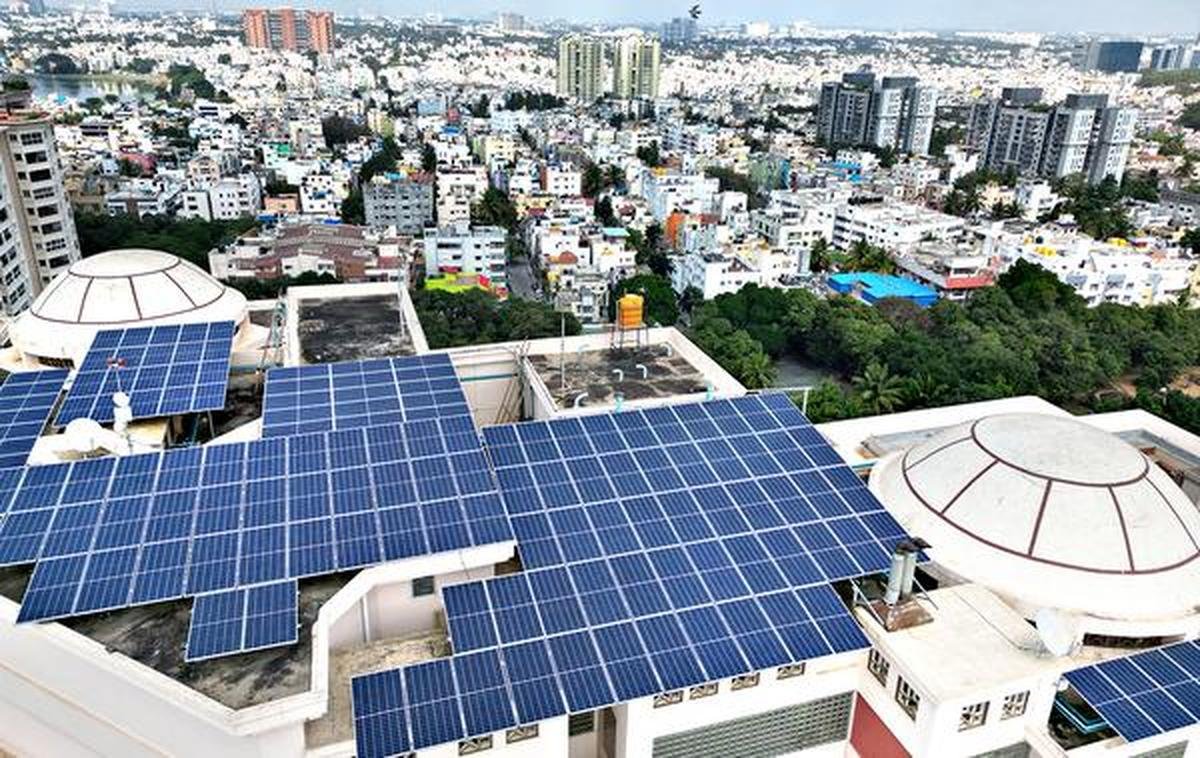
Government Accelerates Rooftop Solar Mission
Union Minister for New and Renewable Energy Shri Pralhad Joshi has announced that the government aims to install rooftop solar systems in 75 lakh households by December 2026. The ambitious target forms a key part of India’s clean energy transition and reflects the government’s commitment to expanding renewable energy adoption at the household level.
Moreover, the initiative is expected to help families reduce electricity bills while contributing to the country’s broader sustainability goals. The announcement highlights the growing focus on decentralized solar power generation across urban and rural areas.
PM Surya Ghar Yojana Drives Solar Expansion
The rooftop solar expansion is being implemented under the PM Surya Ghar: Muft Bijli Yojana, one of the government’s flagship renewable energy schemes. The program aims to promote the adoption of rooftop solar panels by providing financial assistance and incentives to eligible households.
Furthermore, the scheme seeks to make solar energy affordable and accessible to millions of families across the country. As a result, households can generate their own electricity and reduce dependence on conventional power sources.
The initiative is also expected to encourage greater public participation in India’s clean energy journey.
Significant Progress Already Achieved
According to the minister, rooftop solar installations have witnessed substantial growth since the launch of the scheme. Thousands of households have already adopted solar systems, and implementation efforts are being accelerated across states and union territories.
Additionally, government agencies are working closely with distribution companies, vendors, and state authorities to streamline approvals and installation processes.
Consequently, the pace of rooftop solar adoption is expected to increase significantly in the coming months.
Benefits for Households and Consumers
The rooftop solar initiative offers several advantages for homeowners. Solar systems can help reduce monthly electricity expenses and provide long-term savings on energy consumption.
Moreover, surplus electricity generated by rooftop systems can often be supplied back to the grid through net metering arrangements, creating additional financial benefits for consumers.
Some key benefits include:
- Lower electricity bills
- Clean and renewable energy generation
- Reduced carbon footprint
- Long-term cost savings
- Greater energy independence
Therefore, rooftop solar installations are becoming an increasingly attractive option for households.
Supporting India’s Renewable Energy Goals
The government’s target aligns with India’s broader objective of expanding non-fossil fuel energy capacity and reducing greenhouse gas emissions. Renewable energy has become a central pillar of the country’s energy strategy.
Furthermore, rooftop solar systems contribute directly to clean energy generation without requiring large-scale land acquisition. This makes them an efficient and sustainable solution for meeting growing energy demands.
As a result, the initiative supports both environmental and economic objectives.
Boost for Green Jobs and Local Industry
The rapid expansion of rooftop solar installations is also expected to generate employment opportunities across the renewable energy sector. Demand for solar equipment, installation services, maintenance, and technical support is likely to increase significantly.
Additionally, the initiative can strengthen India’s domestic solar manufacturing ecosystem by creating greater demand for locally produced components and equipment.
Consequently, the program supports economic growth alongside environmental sustainability.
Government Focuses on Energy Security
Increasing rooftop solar capacity can help reduce pressure on traditional power infrastructure and improve energy security. Distributed solar generation allows electricity to be produced closer to where it is consumed.
Moreover, decentralized energy systems can enhance grid resilience and reduce transmission losses.
Therefore, rooftop solar is increasingly viewed as an important component of India’s future energy architecture.
Public Participation Key to Success
Officials have emphasized that public participation will play a crucial role in achieving the target of 75 lakh installations. Awareness campaigns, simplified procedures, and financial incentives are expected to encourage more households to adopt solar energy.
Meanwhile, state governments and implementing agencies continue to expand outreach efforts to ensure wider participation in the scheme.
As a result, the program is gaining momentum across different regions of the country.
Conclusion
The government’s target of installing rooftop solar systems in 75 lakh households by December 2026 marks a major step toward building a cleaner and more sustainable energy future. Through the PM Surya Ghar initiative, millions of families are expected to benefit from affordable renewable energy and reduced electricity costs.
Moreover, the program supports India’s climate goals, strengthens energy security, and creates new economic opportunities. As implementation accelerates, rooftop solar is set to become a key driver of the country’s renewable energy transformation.