Supreme Court Declines Request for CBT-Based NEET Re-Examination
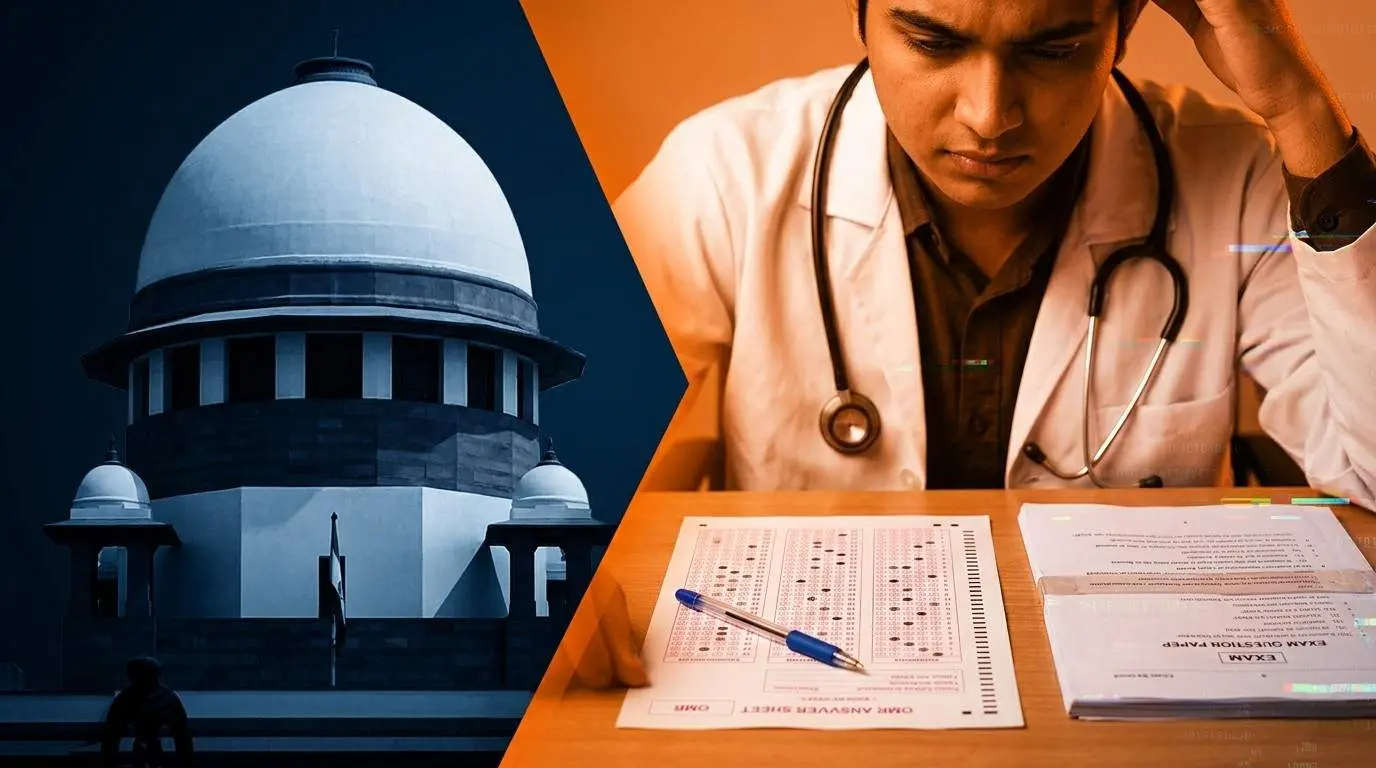
The Supreme Court has refused to entertain a plea seeking the conduct of the NEET-UG 2026 re-examination in Computer-Based Test (CBT) mode instead of the traditional pen-and-paper format. The petition was filed in the wake of the NEET paper leak controversy and sought a digital examination system for the rescheduled test scheduled on June 21.
A vacation bench comprising Justices P.S. Narasimha and Aravind Kumar declined to issue immediate directions to the National Testing Agency (NTA), allowing preparations for the re-examination to continue under the existing format.
Court Refuses Urgent Intervention
During the hearing, the Supreme Court observed that the NTA is already under significant pressure to conduct the re-examination after the cancellation of the original test. The bench noted that similar requests had been made earlier and expressed reluctance to interfere at this stage.
The court decided to list the matter for hearing after the summer vacation, effectively rejecting any immediate change in the examination mode for the June 21 re-test.
Background: NEET-UG 2026 Paper Leak Controversy
The plea emerged after the NEET-UG 2026 examination conducted on May 3 was cancelled following allegations of a large-scale paper leak. The controversy sparked nationwide concern among students, parents, and educational experts regarding the integrity and security of the examination process.
Following the allegations, the matter was referred to the Central Bureau of Investigation (CBI), and authorities announced a nationwide re-examination to restore confidence in the medical entrance test system.
Petitioners Sought Greater Security Through Digital Exams
The petitioners argued that conducting the exam in CBT mode could help prevent paper leaks and improve examination security. They also sought broader reforms, including enhanced biometric verification, AI-based monitoring systems, encrypted digital platforms, and stricter anti-cheating mechanisms.
Supporters of the move believe computer-based examinations offer better safeguards against malpractice and can ensure greater transparency in high-stakes competitive exams.
NTA Preparing for Future Digital Transition
Although the Supreme Court refused to alter the format for the upcoming re-test, the National Testing Agency has informed the court that it is preparing to transition NEET-UG to a computer-based format in the future. According to submissions made before the apex court, the shift is expected to take place from 2027 following recommendations from a high-level expert committee.
The Union Education Ministry has also indicated that digital examinations offer stronger security features, faster result processing, and improved examination management.
Students Await June 21 Re-Test
With the Supreme Court’s decision, the June 21 NEET-UG re-examination will proceed in the traditional pen-and-paper mode. Thousands of medical aspirants across the country are now preparing for the re-test, which will play a crucial role in determining admissions to undergraduate medical courses.
Authorities have assured candidates that additional security measures will be implemented to ensure the examination is conducted fairly and transparently.
Conclusion
The Supreme Court’s refusal to mandate a computer-based format for the NEET-UG 2026 re-examination means that the June 21 test will continue in pen-and-paper mode. While the court has postponed detailed consideration of examination reforms, the debate over digital testing and exam security is likely to continue. With the NTA planning a future transition to CBT mode, the NEET examination system may undergo significant changes in the coming years.