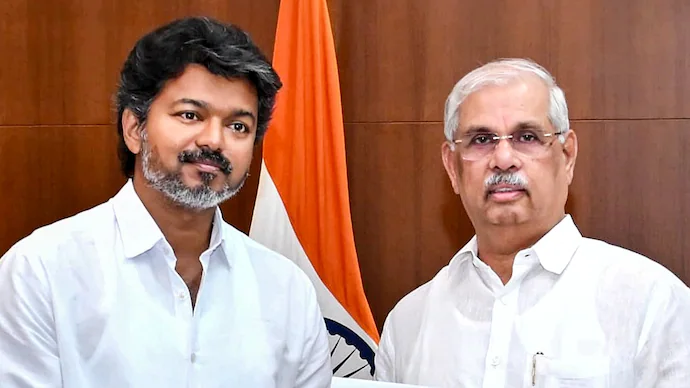
The Tamil Nadu Government Formation Deadlock continues to dominate political discussions in the state as leaders and MLAs of the Viduthalai Chiruthaigal Katchi (VCK) and Left parties held important meetings regarding possible support arrangements and alliance coordination after the assembly election results.
With no clear political resolution emerging immediately after the election outcome, coalition discussions and strategic consultations have gained momentum among various parties. Political observers describe the current situation as one of the most closely watched developments in Tamil Nadu politics in recent years.
According to party sources, MLAs from VCK and Left parties met to deliberate on their political position and discuss future support strategies. The meetings reportedly focused on issues related to government formation, alliance coordination, policy priorities, and political stability in the state.
The election results created a highly competitive political environment in Tamil Nadu, leading to intense negotiations among parties and alliance groups. Senior political leaders are expected to continue consultations over the coming days as efforts are made to resolve the leadership and government formation situation.
Political analysts believe smaller parties and alliance partners could play a decisive role in determining the final political outcome. In closely contested electoral scenarios, support from regional and ideological allies often becomes crucial for government formation and legislative stability.
The Viduthalai Chiruthaigal Katchi (VCK) has historically maintained influence in Tamil Nadu politics through its social justice-focused agenda and alliance-based political strategy. Similarly, Left parties continue to hold importance in coalition politics due to their organizational networks and ideological presence in several constituencies.
The ongoing Tamil Nadu Government Formation Deadlock has increased political activity across Chennai and other parts of the state. Meetings between senior leaders, alliance representatives, and legislators are taking place as parties evaluate possible political arrangements and negotiation strategies.
Experts suggest that discussions are not only centered on support numbers but also on policy commitments, governance priorities, cabinet representation, and long-term alliance coordination. Such negotiations are common in situations where election outcomes produce complex political equations.
Meanwhile, supporters of different political parties remain actively engaged as speculation grows over possible coalition structures and leadership decisions. Media attention has intensified around every political meeting and statement connected to the government formation process.
Political commentators note that Tamil Nadu’s political landscape has traditionally been shaped by strong regional parties and alliance dynamics. Therefore, support decisions made by parties like VCK and Left groups could significantly influence the final direction of the state’s new government.
The current political uncertainty has also triggered discussions about stability, governance continuity, and future policy implementation in the state. Business groups, social organizations, and citizens are closely monitoring developments as they await clarity on the next government.
The Tamil Nadu Government Formation Deadlock is expected to continue until parties finalize their support positions and leadership decisions. Political observers believe the coming days will be crucial in determining whether alliance negotiations can successfully break the stalemate and pave the way for government formation in Tamil Nadu.