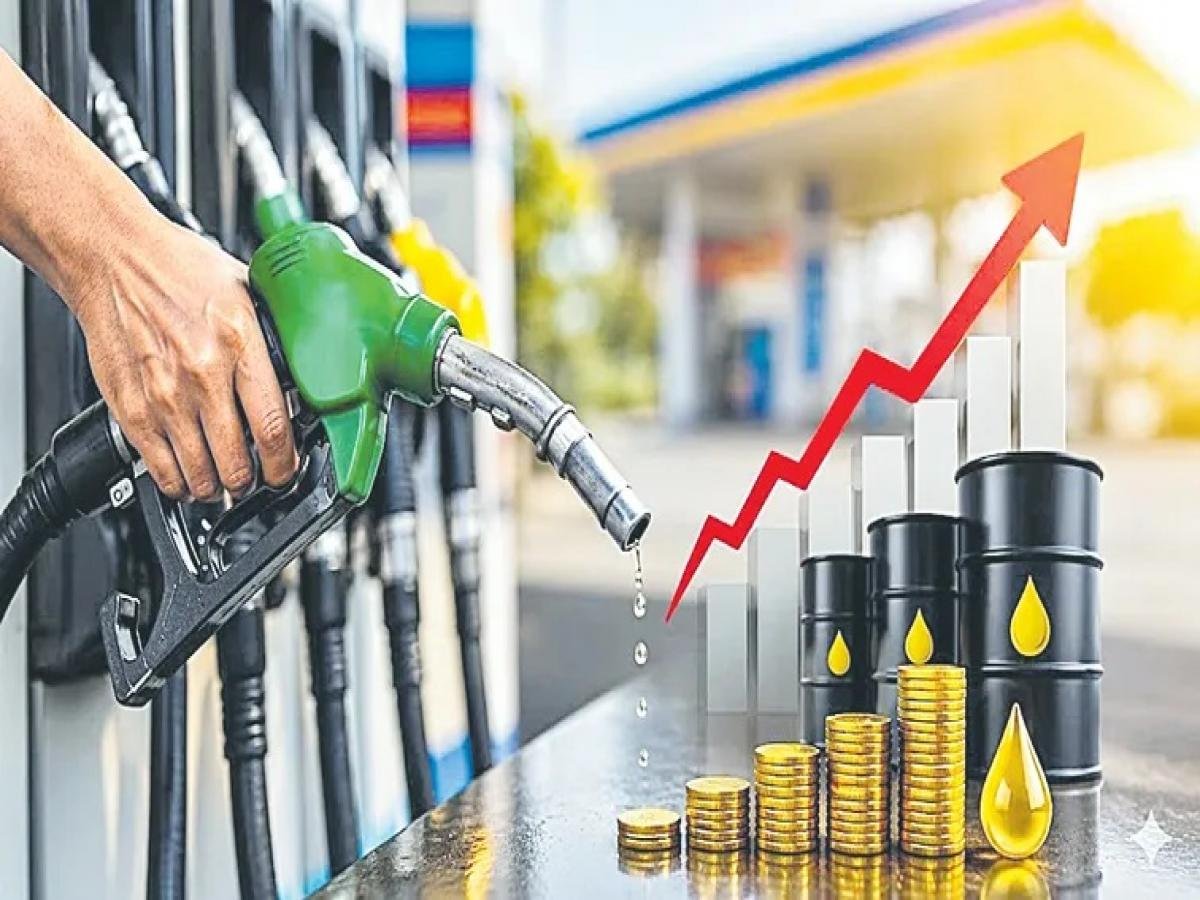
Petrol prices have once again crossed the psychologically important ₹100-per-litre mark in several Indian metros, triggering widespread concern among consumers, businesses, and transport sectors. The latest fuel price revision has intensified fears that the current increase may not be the last, especially as global crude oil prices remain volatile amid continuing geopolitical tensions in West Asia.
State-run oil marketing companies increased petrol and diesel prices for the fourth time in less than two weeks, pushing fuel rates sharply higher across major cities. In Delhi, petrol prices climbed above ₹102 per litre, while Mumbai, Kolkata, and Chennai also witnessed steep increases.
The repeated hikes have sparked concerns about inflation, transportation costs, and the overall economic burden on ordinary citizens.
Petrol Prices Rise Sharply Across Indian Metros
According to the latest revisions:
- Delhi petrol crossed ₹102 per litre
- Mumbai petrol moved above ₹111 per litre
- Kolkata petrol surged beyond ₹113 per litre
- Chennai prices also rose significantly above ₹107 per litre
Diesel prices have also increased sharply, affecting transportation, logistics, agriculture, and essential commodity supply chains.
Reports indicate that cumulative petrol price hikes over the last 10 days have crossed ₹7 per litre in several cities.
Why Fuel Prices Are Rising
The recent surge in fuel prices is closely linked to rising global crude oil prices caused by escalating geopolitical tensions in West Asia, especially disruptions linked to the Strait of Hormuz.
The Strait of Hormuz is one of the world’s most critical oil shipping routes, through which nearly one-fifth of global oil trade passes. Any disruption in this region directly impacts countries like India that rely heavily on imported crude oil.
Experts say India’s crude oil import costs have risen sharply due to:
- Global supply disruptions
- Higher crude oil prices
- Weakening Indian rupee
- Increased shipping and insurance costs
- Continued geopolitical uncertainty
India imports nearly 85 percent of its crude oil requirements, making domestic fuel prices highly sensitive to international market movements.
Why This May Not Be the Last Hike
Analysts believe further fuel price increases remain possible if crude oil prices continue to stay elevated globally.
Reports suggest:
- Oil marketing companies are still facing under-recoveries
- Global crude prices remain unstable
- Supply chain disruptions continue
- Retail fuel prices may still not fully reflect actual import costs
Experts warn that if Brent crude remains above the $100-per-barrel range, additional price revisions may become unavoidable.
The situation has created uncertainty regarding:
- Inflation trends
- Transportation costs
- Food and commodity prices
- Household expenses
- Industrial operating costs
Impact on Common Citizens
The rising fuel prices are expected to affect everyday life significantly because petrol and diesel directly influence transportation and logistics costs.
Likely impacts include:
- Higher bus and taxi fares
- Increase in food delivery and freight charges
- Rising prices of vegetables and essentials
- Increased commuting expenses
- Pressure on household budgets
Middle-class families and lower-income groups are expected to feel the impact most strongly.
Inflation Concerns Grow
Economists warn that sustained fuel price increases can trigger broader inflationary pressure across the economy.
Higher fuel costs often lead to:
- Increased transportation expenses
- Higher manufacturing costs
- Rising agricultural input expenses
- Costlier consumer goods
Several analysts believe inflation could rise further if fuel prices continue climbing in the coming weeks.
Government Measures and Conservation Push
Amid the fuel price surge, Prime Minister Narendra Modi recently urged citizens to conserve fuel and reduce dependence on imported products in order to help save foreign exchange reserves.
The government has also reportedly focused on:
- Energy conservation measures
- Promoting electric vehicles
- Encouraging renewable energy adoption
- Expanding ethanol blending initiatives
However, experts say global oil market stability remains the biggest factor influencing future fuel prices.
Growing Push Toward Electric Vehicles
The continuous rise in petrol and diesel prices is also expected to accelerate India’s shift toward:
- Electric vehicles (EVs)
- Public transportation
- Alternative fuels
- Renewable energy solutions
Industry experts believe expensive fuel strengthens the economic case for EV adoption, especially in urban areas where daily commuting costs are rising rapidly.
Conclusion
The latest fuel price hikes pushing petrol above ₹100 in several Indian metros have reignited concerns over inflation, household expenses, and economic pressure on citizens.
With global crude oil markets still unstable and geopolitical tensions continuing, experts warn that the current price rise may not be the last. Consumers across the country are now closely watching future government decisions and international oil market developments for relief.