PM Modi Highlights Antyodaya as Foundation of Governance
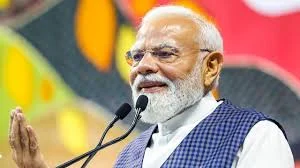
Prime Minister Narendra Modi has said that the welfare of the poor, inspired by the philosophy of Antyodaya, has been the guiding force behind the government’s policies over the last 12 years. He emphasized that ensuring the upliftment of the last person in society remains central to the government’s development agenda.
Moreover, the Prime Minister noted that every major welfare initiative launched during this period has focused on improving the lives of the poor, marginalized, and underprivileged sections of society.
Understanding the Concept of Antyodaya
Antyodaya, a concept associated with Pandit Deendayal Upadhyaya, advocates for the welfare and upliftment of the most disadvantaged individuals in society. The philosophy emphasizes inclusive growth and ensuring that development reaches those who need it the most.
Furthermore, PM Modi stated that this principle has shaped the government’s approach to policymaking, welfare delivery, and social empowerment.
As a result, several schemes have been designed with the objective of reaching beneficiaries at the grassroots level.
Welfare Schemes Focused on the Poor
Over the years, the government has implemented numerous programs aimed at improving living standards and expanding access to basic services. These initiatives cover areas such as housing, healthcare, sanitation, financial inclusion, food security, and rural development.
Moreover, flagship schemes have sought to provide direct support to millions of families across the country.
Some major focus areas include:
- Affordable housing
- Healthcare coverage
- Financial inclusion
- Food security
- Clean cooking fuel
- Rural infrastructure development
Consequently, welfare delivery has become more targeted and efficient.
Technology Strengthening Welfare Delivery
The Prime Minister highlighted the role of technology in ensuring transparency and accountability in government schemes. Digital platforms and Direct Benefit Transfer (DBT) systems have enabled benefits to reach eligible beneficiaries directly.
Additionally, the use of technology has helped reduce leakages and improve the efficiency of welfare programs.
Therefore, millions of citizens have gained easier access to government assistance and services.
Inclusive Development Remains a Priority
According to PM Modi, the government’s development model focuses on ensuring that economic growth benefits every section of society. Special emphasis has been placed on empowering women, farmers, youth, and economically weaker communities.
Furthermore, various initiatives have been launched to improve access to education, healthcare, employment opportunities, and essential services.
As a result, inclusive development continues to remain a core objective of governance.
Empowerment Beyond Welfare
The Prime Minister emphasized that the government’s efforts extend beyond providing assistance. Several programs have been designed to promote self-reliance, entrepreneurship, and skill development among citizens.
Moreover, initiatives supporting small businesses, farmers, and self-help groups aim to create sustainable economic opportunities.
Consequently, the focus has increasingly shifted toward long-term empowerment and livelihood generation.
Rural Development and Social Transformation
Rural development has been another important pillar of the government’s Antyodaya-driven approach. Investments in roads, housing, drinking water, electrification, and digital connectivity have improved living conditions in villages.
In addition, rural welfare programs have contributed to greater economic participation and social inclusion.
Therefore, development efforts have sought to bridge gaps between urban and rural areas.
Vision for the Future
PM Modi reiterated that the government’s commitment to Antyodaya will continue to guide future policies and development initiatives. The objective remains to ensure that every citizen has access to opportunities, resources, and a better quality of life.
Moreover, the government aims to build on the progress achieved over the past decade by further strengthening welfare systems and expanding economic opportunities.
As a result, Antyodaya is expected to remain a key pillar of India’s development strategy.
Conclusion
Prime Minister Narendra Modi’s remarks underscore the importance of Antyodaya in shaping government policies over the last 12 years. By focusing on the welfare of the poor and ensuring that development reaches the most vulnerable sections of society, the government has sought to promote inclusive growth and social empowerment.
Moreover, continued emphasis on welfare, technology-driven governance, and self-reliance is expected to further strengthen India’s journey toward equitable and sustainable development.