Government Tightens Fuel Export Norms
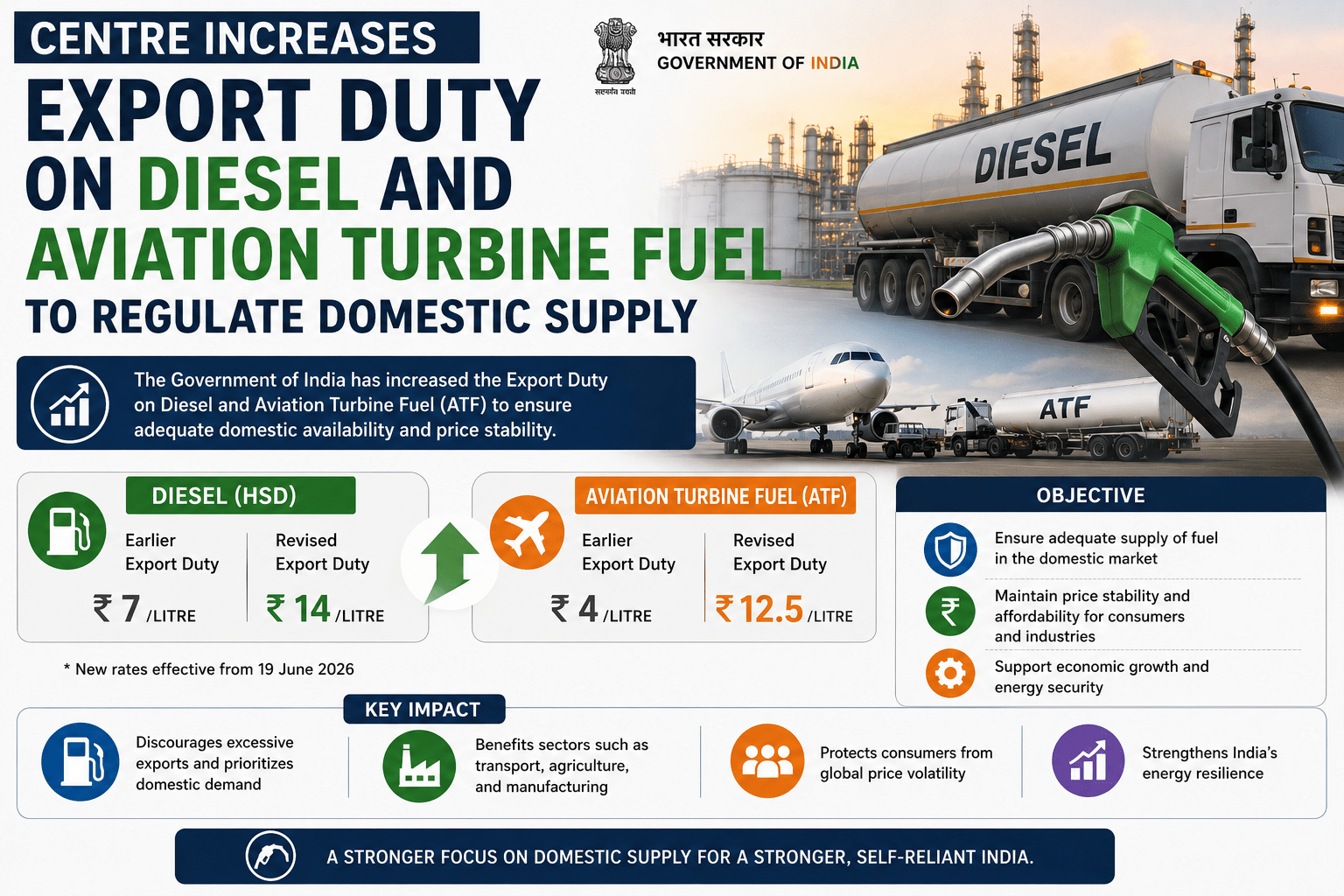
The Central Government has increased the export duty on diesel and aviation turbine fuel (ATF) in a move aimed at maintaining adequate domestic availability and stabilizing fuel supplies. The decision comes amid fluctuations in global energy markets and rising concerns over ensuring sufficient fuel stocks for domestic consumption.
Moreover, the revised duties are expected to encourage refiners to prioritize local demand while maintaining market stability.
Focus on Strengthening Domestic Fuel Supply
The government periodically reviews windfall taxes and export duties based on international crude oil prices and domestic requirements. By increasing export duties on diesel and aviation turbine fuel, authorities seek to prevent excessive exports that could affect local availability.
Furthermore, ensuring adequate fuel supplies remains crucial for transportation, industrial activity, and aviation operations.
As a result, the move is expected to support energy security and protect consumers from supply disruptions.
Impact on Refiners and Exporters
The revised duty structure may affect refiners and exporters who have benefited from favorable international prices. Higher export duties are likely to reduce profit margins on overseas sales and encourage companies to allocate a larger share of production to the domestic market.
Additionally, analysts believe the measure reflects the government’s balancing act between supporting exports and safeguarding domestic interests.
Consequently, energy companies are expected to adjust their strategies accordingly.
Global Energy Market Volatility a Key Factor
International crude oil prices have witnessed fluctuations due to geopolitical tensions and changing demand patterns. Such developments often influence fuel pricing and supply decisions around the world.
Moreover, governments across various countries have been adopting measures to protect domestic markets from external shocks.
Therefore, India’s decision to revise export duties aligns with efforts to strengthen energy resilience.
Aviation Sector and Transportation in Focus
Aviation turbine fuel plays a critical role in the functioning of the aviation industry, while diesel remains essential for transportation and logistics. Ensuring adequate supplies of these fuels is considered vital for sustaining economic activity and maintaining supply chains.
Furthermore, stable fuel availability helps avoid disruptions in key sectors and supports overall economic growth.
As a result, the government’s move is aimed at maintaining a balanced fuel ecosystem.
Regular Review Mechanism Continues
The Centre has consistently adopted a dynamic approach toward export duties and windfall taxes. These rates are periodically reviewed in response to changes in global oil prices and market conditions.
Additionally, the government remains committed to ensuring that domestic consumers and industries are protected from excessive volatility.
Consequently, further adjustments may be made depending on future developments in international energy markets.
Conclusion
The Centre’s decision to increase export duties on diesel and aviation turbine fuel underscores its focus on ensuring adequate domestic supply and maintaining energy security. Amid uncertain global conditions, the move aims to strike a balance between export opportunities and the needs of the domestic market.
Moreover, the policy highlights the government’s commitment to safeguarding fuel availability and supporting economic stability.