The UDF Victory in Kerala 2026 has emerged as one of the most significant political developments in the country, with the Congress-led United Democratic Front (UDF) securing a sweeping mandate in the Kerala Assembly elections. The alliance reportedly won 102 seats, bringing an end to the Left Democratic Front’s (LDF) decade-long rule in the state.
The election outcome marks a major comeback for the UDF, which successfully regained public support after years in opposition. Political analysts describe the result as a decisive mandate for change, with voters favoring the Congress-led alliance across several regions of Kerala.
The UDF’s campaign focused on issues such as unemployment, rising cost of living, economic management, infrastructure development, welfare measures, and governance reforms. Senior Congress leaders and alliance partners conducted extensive public outreach programs, rallies, and constituency-level campaigns during the election period.
The result is being viewed as a setback for the ruling LDF, which had governed Kerala for the past ten years. Despite highlighting welfare schemes, healthcare achievements, and development projects, the alliance could not retain enough voter support to continue in power.
Political experts believe anti-incumbency sentiment played a major role in the election outcome. Many voters reportedly sought a political shift after two consecutive terms of LDF governance. The UDF’s organizational efforts and alliance coordination also contributed significantly to its strong performance.
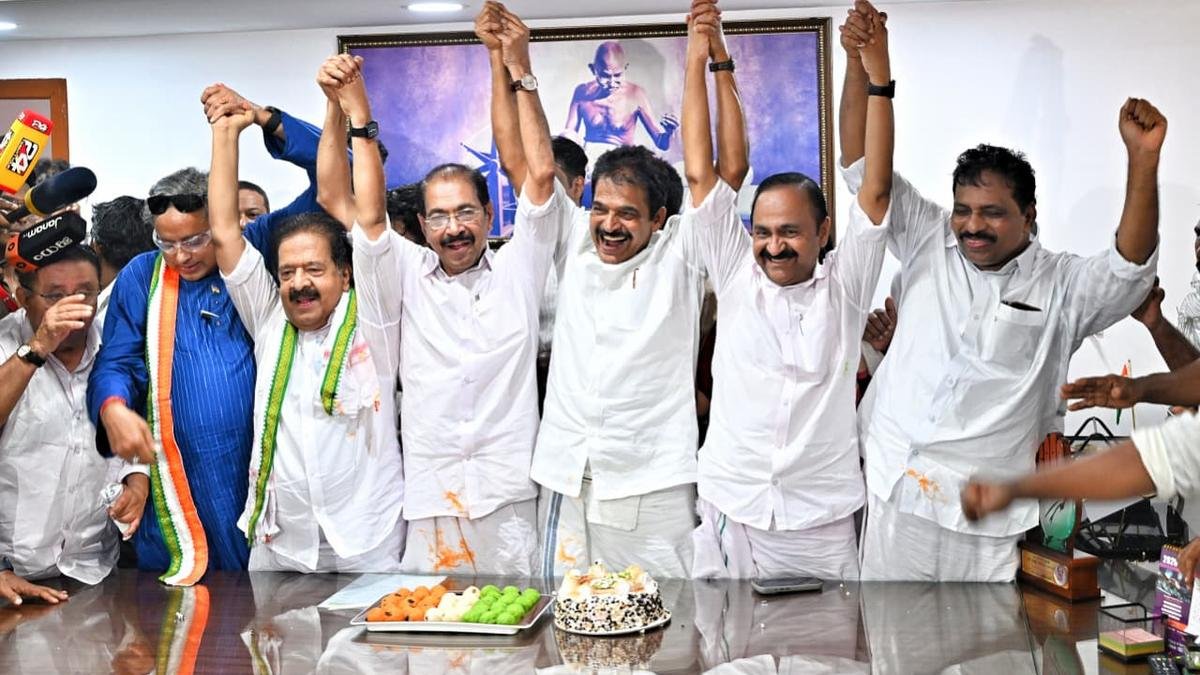
Celebrations erupted at Congress and UDF offices across Kerala as election results confirmed the alliance’s victory. Party workers gathered with flags, sweets, and victory marches while senior leaders thanked the people of Kerala for their trust and support.
Leaders of the UDF described the victory as a mandate for democratic governance, transparency, and development-oriented policies. They assured citizens that the new government would focus on job creation, economic growth, social welfare, education, and infrastructure modernization.
The Kerala Assembly election was closely watched nationally due to the state’s political importance and history of competitive electoral contests. The victory is expected to strengthen the Congress party’s morale and political standing ahead of future national and regional elections.
Several political observers also noted the role of youth voters and first-time voters in shaping the election outcome. Public discussions on employment opportunities, education, inflation, and governance reportedly influenced voting patterns in many constituencies.
The UDF Victory in Kerala 2026 may also impact broader opposition politics at the national level, as parties assess changing voter preferences and alliance strategies. Analysts believe the result could encourage stronger opposition coordination in future electoral contests.
As attention now shifts toward government formation, discussions are expected regarding cabinet positions, leadership roles, and policy priorities for the incoming administration. Supporters of the UDF expressed optimism that the new government would focus on inclusive development and efficient governance.
The election result marks a historic political transition in Kerala and signals the beginning of a new phase in the state’s political landscape after ten years of LDF rule.