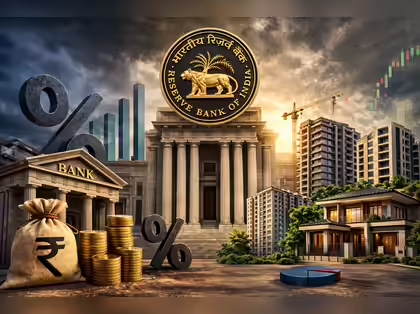
The Reserve Bank of India (RBI) has adopted a cautious stance on interest rates in 2026, reflecting growing concerns over inflation, global instability, and economic uncertainty. In its latest monetary policy review, the central bank decided to keep the repo rate unchanged at around 5.25%, signaling a wait-and-watch approach rather than immediate policy changes.
This decision comes at a time when global geopolitical tensions—especially in oil-producing regions—are pushing up crude prices. Rising oil costs directly impact inflation in India, as the country depends heavily on imports for energy needs. The RBI has acknowledged that such external shocks could lead to “second-round effects” on inflation, including higher prices for goods, services, and wages.
📊 Why RBI Is Being Cautious
The RBI’s cautious stance is driven by a delicate balancing act between controlling inflation and supporting economic growth:
- Rising Inflation Risks:
Global conflicts have pushed oil prices higher, increasing input costs across industries and raising inflation concerns. - Global Uncertainty:
Ongoing geopolitical tensions and supply chain disruptions make future economic conditions unpredictable, forcing policymakers to remain flexible. - Growth Concerns:
While India’s economy remains relatively strong, growth projections have been slightly moderated due to external pressures.
📉 What This Means for the Economy
The RBI’s decision to hold rates steady has several implications:
- Stable Loan EMIs:
Borrowers with home, car, or personal loans are unlikely to see immediate changes in interest rates. - Controlled Inflation Expectations:
By not cutting rates too early, the RBI aims to prevent inflation from rising further. - Market Stability:
A neutral stance provides confidence to investors and avoids sudden shocks to financial markets.
However, the central bank has also hinted that future rate hikes are possible if inflation pressures intensify, especially due to sustained high oil prices.
🔍 Expert View
Economists believe the RBI is choosing prudence over aggressive action. The current inflation is largely driven by supply-side factors, such as energy prices, where monetary policy has limited immediate impact. Therefore, the RBI is focusing on monitoring data closely before making any major moves.
📌 Conclusion
The RBI’s cautious stance on interest rates highlights a strategic and balanced approach in uncertain times. By maintaining stability while staying alert to inflation risks, the central bank aims to protect both economic growth and price stability.
As global conditions evolve, future policy decisions will depend heavily on inflation trends, oil prices, and overall economic performance—making the coming months crucial for India’s monetary policy direction.