International travel can be exciting, but every traveler must follow the immigration rules of the country they visit. One of the most important rules is staying within the period authorized by immigration authorities. If a person remains in a foreign country after their permitted stay has expired without receiving legal permission to remain, it may be treated as a visa overstay.
Many travelers assume that a few extra days will not create a serious problem. However, immigration laws differ from one country to another, and even a short overstay can sometimes result in fines, additional questioning, visa cancellation, or difficulties with future travel. Longer overstays may have more serious consequences, including detention, removal, deportation, or restrictions on returning to the country.
Understanding how visa overstays work can help travelers avoid unnecessary immigration problems. It is also important to remember that the visa expiration date and the authorized period of stay are not always the same. The date by which you must leave may be determined by your admission record or immigration permission rather than simply the date printed on your visa.
What Is a Visa Overstay?
A visa overstay occurs when a foreign national remains in a country beyond the period they are legally authorized to stay.
For example, suppose immigration authorities allow a visitor to stay until September 10. If the traveler remains in the country after September 10 without an approved extension or another legal basis for staying, the person may be considered an overstayer.
The exact definition and consequences depend on the immigration laws of the country involved.
This is why travelers should not assume that an overstay of one or two days will automatically be treated the same way everywhere. Some countries may impose a daily fine, while others may have stricter procedures.
Visa Expiry Date vs Authorized Stay: What Is the Difference?
One of the most common causes of visa overstays is misunderstanding the difference between visa validity and authorized stay.
A visa generally allows a person to travel to a country and request entry for a particular purpose. It may remain valid for months or years and may allow multiple entries.
However, the length of time you can actually remain in the country during a particular visit may be shorter.
For instance, a visa could be valid until December 2027, while immigration authorities may permit you to remain for only 30 or 90 days after each entry, depending on the applicable rules.
Therefore, travelers should always check:
- Visa validity dates
- Authorized duration of stay
- Entry and exit requirements
- Immigration or admission records
- Extension rules
- Conditions attached to the visa
Knowing these details before and during a trip can prevent accidental overstays.
Why Do People Overstay Their Visas?
Not every overstay happens intentionally. Travelers can find themselves in difficult situations because of unexpected events or simple misunderstandings.
Some common reasons include:
Forgetting the Departure Date
Travelers may have busy schedules and accidentally forget when their authorized stay ends. This can happen particularly when someone has a long-term visa but a shorter permitted stay during each visit.
Flight Delays or Cancellations
A canceled or significantly delayed flight can make it difficult for a traveler to leave on time. However, travelers should not automatically assume that a flight problem gives them permission to remain beyond their authorized stay.
Medical Emergencies
A sudden illness, hospitalization, or medical emergency may prevent someone from traveling as planned. In such circumstances, documentation can become important when communicating with immigration authorities.
Family Emergencies
Serious family situations can also disrupt travel plans. Depending on the country, special procedures may be available in certain circumstances.
Misunderstanding Visa Conditions
Some travelers believe that the expiration date printed on a visa is the final date they can remain in the country. As explained above, this may not always be correct.
Delayed Extension Applications
A person who needs additional time may apply for an extension. However, the rules concerning pending applications vary, so travelers should understand whether they are legally permitted to remain while the application is being processed.
What Are the Penalties for Overstaying a Visa?
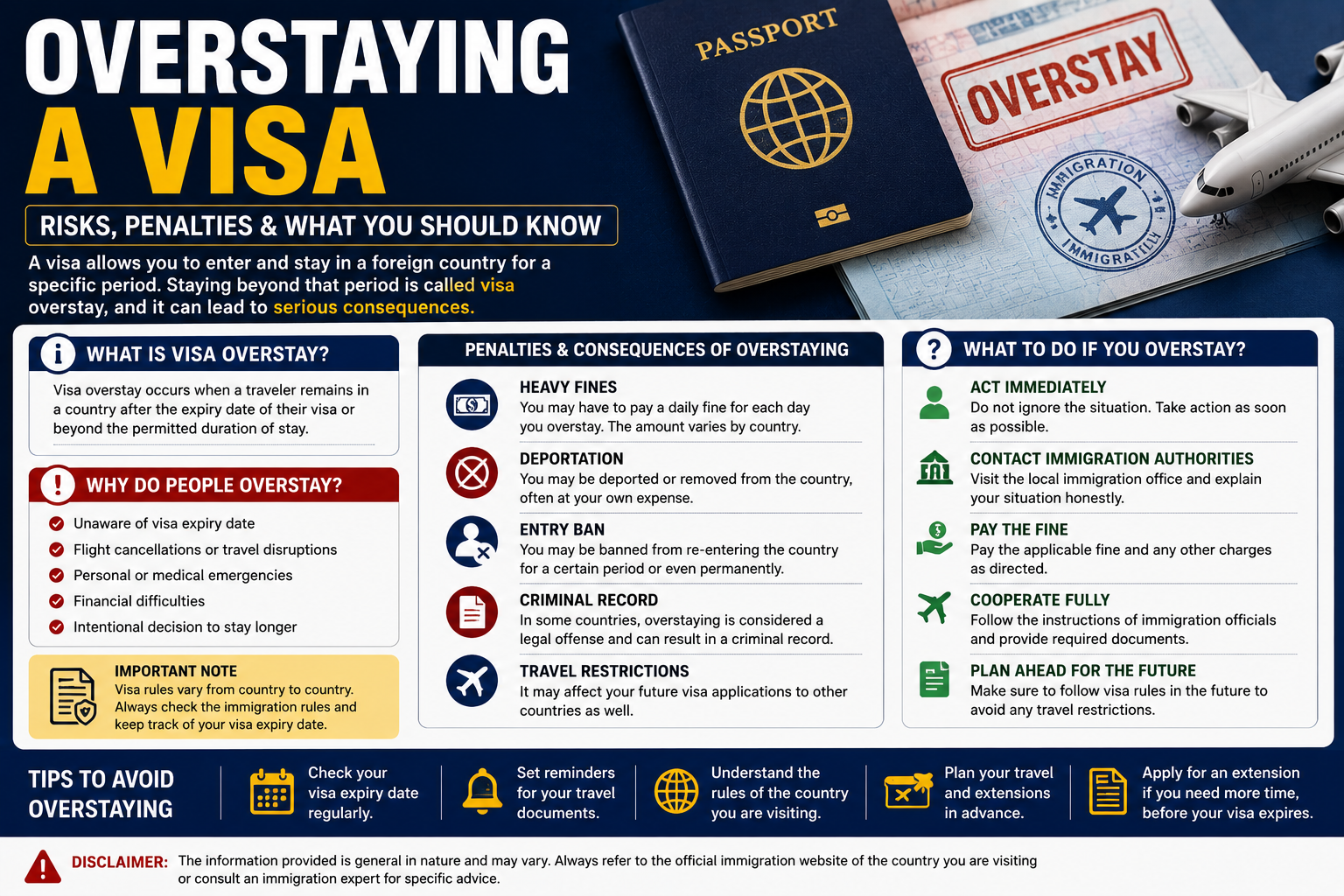
The penalties for overstaying a visa depend on several factors, including the country, duration of the overstay, visa category, reason for the overstay, immigration history, and whether the traveler voluntarily leaves or is found by authorities.
Possible consequences include fines, visa cancellation, immigration proceedings, removal, deportation, and future entry restrictions.
Visa Overstay Fines
One of the most common consequences is a financial penalty.
Some countries calculate overstay fines according to the number of days a person remains beyond the permitted period. The longer the overstay, the greater the financial liability may become.
Additional administrative or departure fees may also apply.
Travelers should always verify the current amount directly with the relevant immigration authority because overstay penalties can change.
Visa Cancellation
An immigration authority may cancel a visa after an individual violates its conditions.
If a visa is canceled, the traveler may have to leave the country and could need to apply for a new visa before returning.
Immigration Interrogation or Additional Screening
An overstayer may face additional questions from immigration officials. Authorities may ask about the reason for the overstay, travel history, employment or study status, accommodation, and intended departure.
Answering questions honestly and providing supporting documentation can be important.
Detention
In serious cases, immigration authorities may detain individuals who do not have lawful status.
Detention policies differ significantly between countries and depend on the circumstances of the immigration violation.
Removal From the Country
Authorities may issue a removal order requiring the person to leave.
Removal procedures vary by jurisdiction and can involve administrative hearings or other legal processes.
Deportation
A serious or prolonged immigration violation can potentially result in deportation.
Deportation can have consequences beyond the immediate trip because immigration records may be considered during future visa applications.
Future Entry Restrictions
Some countries may restrict a person’s ability to return after an overstay.
The length and nature of any restriction can depend on the duration and circumstances of the violation.
Problems With Future Visa Applications
An immigration violation can affect future applications.
When applying for another visa, applicants may be asked whether they have previously violated immigration rules, overstayed, been removed, or experienced other immigration problems.
A previous overstay does not automatically guarantee that a future application will be refused. However, applicants should disclose relevant information accurately and provide an explanation when required.
What Happens If You Overstay a Visa by a Few Days?
A short overstay may appear harmless, but travelers should not assume that it has no consequences.
The response to a short overstay depends entirely on the country’s immigration system.
In some countries, a short overstay may result in a fine or administrative process. In other situations, it may affect future immigration records.
The reason for the overstay can also matter. For example, an unexpected medical emergency supported by documentation may be considered differently from intentionally remaining in the country without authorization.
The safest approach is to check the applicable immigration rules rather than relying on advice from friends, social media posts, or unofficial websites.
What Should You Do If You Accidentally Overstay?
If you discover that your authorized stay has already expired, do not ignore the situation.
The first step should be to determine exactly when your legal stay ended and whether you have any valid extension, pending application, or other authorization.
You should then contact the relevant immigration authority or consult a qualified immigration professional if the situation is complicated.
Depending on the country and circumstances, you may need to:
- Report the overstay to immigration authorities.
- Pay applicable fines or fees.
- Apply for an appropriate extension or status, if legally available.
- Arrange departure from the country.
- Provide documents explaining the circumstances.
- Follow any instructions issued by immigration officials.
The correct procedure varies by country, so there is no universal solution for every visa overstay.
Documents You May Need
If your overstay resulted from an emergency or unexpected situation, supporting documents may help explain what happened.
Depending on the circumstances, relevant documents may include:
- Passport
- Visa copy
- Entry stamp or admission record
- Flight tickets
- Boarding passes
- Medical records
- Hospital documents
- Travel insurance documents
- Proof of flight cancellation
- Communication from an airline
- Extension application documents
- Other evidence explaining the reason for the overstay
Keep original documents safely and maintain digital copies when possible.
Can You Extend Your Visa Before It Expires?
In some countries and for certain visa categories, travelers can request an extension before their authorized stay ends.
However, an extension is not automatically available to every traveler.
Eligibility may depend on:
- Visa category
- Purpose of travel
- Current immigration status
- Length of requested extension
- Country-specific immigration rules
- Supporting documents
- Application deadline
- Financial or accommodation requirements
If you know that you need more time, start the process as early as possible.
Waiting until the last day can create unnecessary complications, particularly if additional documents or appointments are required.
Does Applying for a Visa Extension Prevent an Overstay?
Not necessarily.
A traveler should not assume that simply submitting an application automatically creates legal permission to remain.
Whether a pending application allows someone to stay legally depends on the country’s immigration laws and the type of application submitted.
Always confirm the status of your application and whether you have lawful authorization to remain while it is being processed.
Can a Visa Overstay Affect Future International Travel?
Yes, it can.
Immigration authorities may maintain records of entry, exit, visa applications, and immigration violations. A previous overstay may therefore become relevant when a person applies for another visa or enters a country again.
Future immigration officers may want to know:
- How long you overstayed
- Why you overstayed
- Whether you paid applicable penalties
- Whether you left voluntarily
- Whether you were removed or deported
- Whether you have previously violated visa conditions
The impact varies significantly by country and individual circumstances.
Can You Get Another Visa After an Overstay?
A previous overstay does not always mean that you can never obtain another visa.
However, the previous violation may be considered during the application process.
Applicants should never hide an immigration violation when a visa application asks about previous overstays or immigration history. Providing inaccurate information can create a separate and potentially more serious problem.
If the overstay was caused by circumstances outside your control, explain the situation clearly and provide supporting evidence where appropriate.
Does an Overstay Affect Visa-Free Travel?
It potentially can, depending on the countries involved and their information-sharing and immigration rules.
A previous immigration violation in one country may become relevant to future travel decisions, particularly when countries have information-sharing arrangements or ask applicants about previous immigration violations.
Travelers should therefore take visa compliance seriously even when they normally travel under visa-free or visa-waiver arrangements.
How to Prevent a Visa Overstay
The best way to avoid overstay penalties is to plan ahead.
Check Your Authorized Stay
Do not rely only on the visa’s expiration date. Confirm the exact period you are permitted to remain after entering the country.
Set Multiple Reminders
Set reminders on your phone well before the departure date. A reminder 30 days before departure and another one a week before departure can help prevent mistakes.
Keep Immigration Documents Accessible
Maintain digital and physical copies of your passport, visa, entry records, and other important travel documents.
Check Extension Rules Early
If you think your trip may last longer than originally planned, research extension requirements before your authorized stay expires.
Leave Extra Time for Travel
Avoid booking a flight so close to your departure deadline that a small delay could result in an overstay.
Check Official Immigration Information
Immigration rules can change. Always confirm requirements through the relevant government’s official immigration or embassy website.
What If Your Flight Is Cancelled and Your Visa Expires?
A flight cancellation can create a stressful situation, particularly when the new flight date falls after the permitted departure date.
Do not simply wait for the new flight without checking the immigration rules.
Contact the airline and, where necessary, the relevant immigration authority. Keep evidence of the original booking, cancellation notice, new booking, and any communication related to the disruption.
Whether the circumstances excuse or reduce the consequences depends on the applicable law. Documentation can be important when explaining why you could not leave on time.
Is Visa Overstay the Same as Illegal Stay?
The terms can overlap, but the exact legal meaning depends on the country’s immigration framework.
Generally, once a person’s authorized period of stay ends and they have no other lawful basis to remain, their continued presence may be treated as an unlawful or unauthorized stay.
However, immigration systems can include different categories of status, pending applications, grace periods, or other provisions. This is why travelers should verify their individual situation rather than assuming that every overstay is treated identically.
Important Things to Remember About Visa Overstay
Before traveling internationally, remember these key points:
- A visa’s validity period may not equal the permitted duration of each stay.
- Overstaying can result in financial penalties.
- Longer overstays can have more serious consequences.
- Immigration authorities may consider previous violations in future applications.
- An emergency does not automatically cancel immigration requirements.
- Extension applications should be made according to the country’s rules.
- A pending application does not necessarily guarantee lawful stay.
- Never provide false information to immigration officials.
- Keep documents that explain unexpected travel disruptions.
- Always check the latest official immigration information.
Final Thoughts
Overstaying a visa is more than simply staying a few extra days after a travel plan changes. It can become an immigration issue that affects fines, departure procedures, future visa applications, and the ability to enter a country again.
The consequences depend on the country, visa type, length of the overstay, reason for remaining, and individual immigration history. For that reason, travelers should avoid assuming that another person’s experience will apply to their own situation.
The best protection is preparation. Check your authorized stay when you enter a country, keep track of the departure deadline, and apply for an extension through the proper process if you are eligible and need additional time. If an unexpected emergency causes an overstay, contact the relevant immigration authority promptly and keep evidence supporting your circumstances.
Following immigration rules carefully can save travelers from unnecessary fines, delays, legal complications, and problems with future international travel.