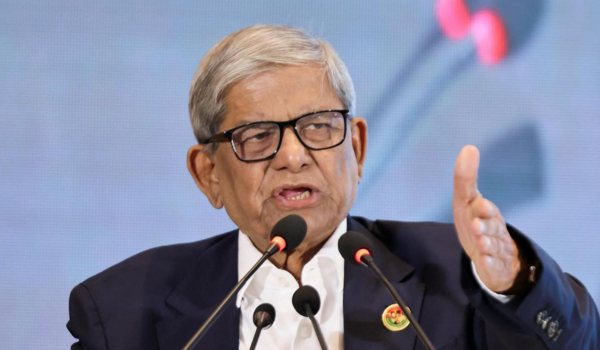
Bangladesh has elected veteran Bangladesh Nationalist Party (BNP) leader Mirza Fakhrul Islam Alamgir as its 23rd President, marking a significant development in the country’s political landscape. Alamgir won the presidential election held at the Jatiya Sangsad, Bangladesh’s Parliament, on August 20, 2026.
The 78-year-old BNP leader secured 255 votes, defeating former army officer and opposition candidate Col. (retd.) Oli Ahmad, who received 88 votes. A total of 343 lawmakers participated in the voting, while six of the 349 registered lawmakers did not cast their votes.
The election is particularly notable because it was the first contested presidential election in Bangladesh in 35 years. The previous contested presidential election was held in 1991. Since then, presidential elections had generally been uncontested or decided without a competitive contest involving multiple candidates.
Alamgir is scheduled to take the oath of office on August 21, 2026, at Bangabhaban, the official residence and workplace of the President of Bangladesh.
Mirza Fakhrul Islam Alamgir Wins Presidential Election
The presidential election took place at the Jatiya Sangsad on Thursday, August 20. Alamgir was nominated by the ruling BNP, while Oli Ahmad contested as the candidate backed by an 11-party opposition alliance.
The final result gave Alamgir a substantial majority:
| Candidate | Votes |
|---|---|
| Mirza Fakhrul Islam Alamgir | 255 |
| Oli Ahmad | 88 |
| Total votes cast | 343 |
Chief Election Commissioner and Returning Officer AMM Nasir Uddin announced the result after voting concluded. The Election Commission subsequently issued a gazette officially declaring Alamgir elected President.
The result places a senior BNP figure in Bangladesh’s highest constitutional office at a time when the country is undergoing a major political transition.
Why Is This Presidential Election Significant?
The election is historic for several reasons.
The most notable factor is that Bangladesh has not witnessed a genuinely contested presidential election for more than three decades. The 2026 contest featured more than one candidate, creating a competitive parliamentary vote for the country’s largely ceremonial presidency.
The election also follows major political changes in Bangladesh since 2024, including the fall of Sheikh Hasina’s government, an interim period under Muhammad Yunus, and the return of the BNP to national power after the February 2026 general election.
Against this background, Alamgir’s election represents another important stage in Bangladesh’s political transition.
Who Is Mirza Fakhrul Islam Alamgir?
Mirza Fakhrul Islam Alamgir is a veteran Bangladeshi politician and a senior leader of the BNP.
Before becoming President, he served as the Secretary General of the Bangladesh Nationalist Party, a position he held since 2016. He has been one of the party’s most prominent public figures and played an important role in its political activities during the years when the BNP was in opposition.
Alamgir’s political career stretches back several decades. Before entering national politics, he worked as a teacher and later held ministerial responsibilities. His long political experience has made him one of the better-known figures within Bangladesh’s political establishment.
His election to the presidency now marks a major change in his political career, moving him from party leadership into the country’s highest constitutional office.
Alamgir’s Political Journey
Mirza Fakhrul Islam Alamgir has been associated with the BNP since the 1990s and gradually became one of its most important organizational and political figures.
During Sheikh Hasina’s long tenure as Prime Minister, Alamgir became a prominent opposition voice. He regularly represented the BNP at political events and in discussions with the media.
His political career was also marked by periods of arrest and legal cases. Anadolu Agency reported that he faced repeated arrests and numerous criminal cases during the years of political confrontation with the former government.
His rise to the presidency therefore represents a significant change from his earlier role as a senior opposition politician.
BNP’s Return to Power
Alamgir’s election as President comes only months after the BNP returned to power following the February 12, 2026 general election.
The BNP and its allies secured a two-thirds parliamentary majority, giving the party considerable influence over the country’s legislative and political institutions.
Tarique Rahman became Prime Minister after the BNP’s electoral victory.
The election of Alamgir as President therefore places two senior BNP figures in Bangladesh’s top constitutional positions: Tarique Rahman as Prime Minister and Mirza Fakhrul Islam Alamgir as President.
Why Was a New President Needed?
The presidential election became necessary after former President Mohammed Shahabuddin resigned before completing his five-year term.
Shahabuddin, who had been elected President in 2023, stepped down citing health reasons. He had been associated with the former Awami League government and was regarded as a close ally of Sheikh Hasina.
Following the vacancy, Parliamentary Speaker Hafiz Uddin Ahmad served as acting President while the constitutional process for electing a new President was initiated.
Bangladesh’s Constitution requires a new President to be elected within 90 days after the office becomes vacant.
Who Was Oli Ahmad?
Alamgir’s opponent in the election was Colonel (retd.) Oli Ahmad, an 84-year-old former army officer and chairman of the Liberal Democratic Party.
He contested the election as the candidate supported by an 11-party opposition alliance led by Bangladesh Jamaat-e-Islami. Ahmad received 88 votes compared with Alamgir’s 255.
Although Alamgir won comfortably, the participation of an opposition candidate made the election historically significant because it created the first competitive presidential contest in Bangladesh in decades.
How Is the President of Bangladesh Elected?
Unlike countries where the president is directly elected by citizens, Bangladesh’s President is elected by members of Parliament.
The 2026 presidential election was therefore decided through a parliamentary vote.
Members of the Jatiya Sangsad cast their ballots at the Parliament building, with the Chief Election Commissioner acting as the returning officer.
The candidate receiving the required majority is declared President in accordance with Bangladesh’s constitutional and electoral framework.
What Powers Does the Bangladesh President Have?
The President of Bangladesh is the head of state, while executive authority is primarily exercised by the Prime Minister and Cabinet.
As a result, the presidency is generally considered a largely ceremonial position under Bangladesh’s parliamentary system.
However, the office remains constitutionally important.
The President also serves as the commander-in-chief of the armed forces. In periods of political uncertainty or national crisis, the position can therefore carry greater significance than its normal ceremonial role might suggest.
Alamgir’s political experience and senior position within the BNP could therefore make his presidency particularly important during Bangladesh’s current political transition.
First Contested Presidential Election Since 1991
One of the most important aspects of the 2026 election is its historical context.
The last time Bangladesh had more than one candidate in a presidential election was in 1991, when BNP candidate Abdur Rahman Biswas defeated Awami League nominee Badruddoza Chowdhury.
For more than three decades after that, presidential elections were generally uncontested.
The 2026 election therefore represents a return to a competitive presidential voting process after a gap of 35 years.
Alamgir’s Oath-Taking Ceremony
Following his election, Mirza Fakhrul Islam Alamgir is expected to take the oath of office at Bangabhaban on Friday, August 21, 2026.
The ceremony will formally begin his tenure as President.
The transition will complete the constitutional process that began after Shahabuddin’s resignation.
Reactions to Alamgir’s Election
Alamgir’s election has received attention both inside Bangladesh and internationally.
Prime Minister Tarique Rahman congratulated him following the result. Other Bangladeshi political leaders also extended their congratulations.
Former interim government chief Muhammad Yunus praised Alamgir’s long political experience and leadership qualities.
China also congratulated Alamgir on his election. Chinese Foreign Ministry spokesperson Lin Jian said China attaches importance to its relationship with Bangladesh and expressed a willingness to work with the new leadership.
The British High Commission in Dhaka also congratulated Alamgir and expressed interest in strengthening the relationship between the United Kingdom and Bangladesh.
What Does Alamgir’s Election Mean for Bangladesh?
The immediate political impact of the election is likely to be closely watched because Alamgir is not a politically independent figure. He comes directly from the leadership of the ruling BNP.
His election creates continuity between the ruling party and the presidency, although the President’s constitutional powers remain different from those of the Prime Minister.
The bigger significance may lie in the broader political transition taking place in Bangladesh.
The country has experienced considerable political upheaval since 2024. The return of the BNP to power, the appointment of a new Prime Minister and now the election of a new President indicate that Bangladesh is entering a new political phase.
What Could Be the Impact on Bangladesh’s Political Future?
The new presidency comes at a time when Bangladesh faces important political and institutional challenges.
The new government will need to deal with questions surrounding democratic institutions, political stability, economic development and relations with neighboring and international countries.
Alamgir’s long political experience could help him navigate the ceremonial and constitutional responsibilities of the presidency.
At the same time, his close association with the BNP means his tenure will likely receive significant political scrutiny.
Bangladesh’s Relations With Other Countries
The change in leadership could also have implications for Bangladesh’s foreign relations.
Bangladesh maintains important relationships with India, China, the United States, the United Kingdom and other regional and international partners.
The new government will need to balance these relationships while focusing on economic growth, trade, security and regional cooperation.
China’s early congratulations to Alamgir indicate Beijing’s interest in maintaining strong relations with Bangladesh.
Other countries are also expected to engage with the new administration as the political transition progresses.
What Happens Next?
The immediate next step is Alamgir’s oath-taking ceremony.
After assuming office, he will formally begin his responsibilities as Bangladesh’s 23rd President.
The focus will then shift toward how the new leadership manages the country’s political transition and whether the government can maintain stability while implementing its broader agenda.
The President’s role will remain largely constitutional and ceremonial, but the political background of the new officeholder makes this transition especially noteworthy.
Key Takeaways
The major points from Bangladesh’s latest presidential election are:
- Mirza Fakhrul Islam Alamgir has been elected Bangladesh’s 23rd President.
- He secured 255 votes in the parliamentary election.
- Opposition candidate Oli Ahmad received 88 votes.
- A total of 343 lawmakers voted.
- The election was the first contested Bangladeshi presidential election since 1991.
- Alamgir is a veteran BNP leader and former party Secretary General.
- The election followed the resignation of former President Mohammed Shahabuddin.
- Alamgir is scheduled to take the presidential oath on August 21, 2026.
- The presidency is largely ceremonial, but the President is also commander-in-chief of Bangladesh’s armed forces.
- His election comes months after the BNP returned to power under Prime Minister Tarique Rahman.
- The development marks another major step in Bangladesh’s ongoing political transition.
Final Thoughts
The election of Mirza Fakhrul Islam Alamgir as Bangladesh’s 23rd President is a significant political development for the country. His victory by 255 votes to 88 over Oli Ahmad ended a 35-year period in which Bangladesh had not held a contested presidential election.
For Alamgir, the election represents a major transformation in his political career. After decades as a senior BNP leader and opposition figure, he is now moving into Bangladesh’s highest constitutional office.
The change also comes at a particularly important moment for Bangladesh. The BNP has returned to power, Tarique Rahman is serving as Prime Minister, and the country is continuing its political transition following years of major upheaval.
While the presidency is largely ceremonial under Bangladesh’s parliamentary system, Alamgir’s extensive political experience and close relationship with the ruling party will make his tenure closely watched both within Bangladesh and abroad.
The coming months will reveal how the new President approaches his constitutional responsibilities and how Bangladesh’s new political leadership shapes the country’s future.
Read More: Overstaying a Visa: Penalties, Consequences, Rules & What to Do