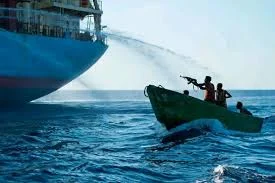
Somali piracy is once again becoming a major concern for the international maritime industry after pirates reportedly hijacked two ships within four days, raising fresh fears about the security of commercial vessels traveling through the waters around Somalia and Yemen.
The latest incidents involve the Cameroon-flagged M/V LUTUF, which was seized off Somalia’s Puntland coast, and the Eritrean-flagged SIBU 1 tanker, which was reportedly hijacked off the coast of Yemen. The two incidents have renewed concerns that Somali piracy, which had declined significantly after years of international naval patrols, could be making a comeback.
The developments are particularly concerning because the region connects several important international shipping routes, including the Gulf of Aden, the Red Sea and the wider Indian Ocean. Increased insecurity in the Middle East and the diversion of some international naval resources toward other regional conflicts are adding complexity to maritime security.
What Happened in the Latest Somali Pirate Attacks?
The first major incident involved the M/V LUTUF, a Cameroon-flagged general cargo vessel that was hijacked off Somalia’s Puntland coast on August 17, 2026.
According to reporting by the Associated Press, the vessel was seized near Marraya in Puntland’s Eyl district by eight armed men. The ship was reportedly carrying Turkish weapons, communications equipment and satellite equipment destined for a Turkish military training facility in Mogadishu.
The 10-member crew reportedly included six Indian nationals, one Turkish national, one Georgian national and two Serbian security guards. The condition of the crew remained unclear in the immediate aftermath of the incident.
The second incident involved the SIBU 1, an Eritrean-flagged tanker reportedly seized off Yemen. According to recent reports, armed pirates boarded the tanker approximately 130 miles from Yemen’s coast before diverting it toward Somali waters. The vessel was reportedly carrying around 20 crew members.
The two incidents occurring within only four days have raised concerns that piracy activity in the region is increasing again.
Six Ships Reportedly Held by Somali Pirates
The recent attacks are not isolated events.
Somali officials have said that six ships are currently being held by pirates, including the two vessels seized this week. More than 100 crew members are reportedly being held hostage across these vessels.
The figures highlight the scale of the renewed concern.
According to recent reporting, more than 17 piracy-related incidents were recorded across Somali waters and the Gulf of Aden during the first five months of 2026. These incidents included the reported hijacking of at least three commercial vessels and several smaller dhow boats.
The increase has prompted renewed attention from maritime security organizations, governments and shipping companies operating in the region.
M/V LUTUF Hijacking: What We Know
The M/V LUTUF incident has attracted particular attention because of the nationality of its crew and the reported nature of its cargo.
The vessel had reportedly departed Turkey and was sailing toward East Africa when it was attacked near Somalia’s coast. Eight armed men reportedly boarded the ship and took control of it.
The presence of six Indian nationals among the crew has also raised concern in India.
The ship was reportedly carrying Turkish military-related equipment, including weapons and communications equipment. The cargo was reportedly intended for a Turkish military training facility in Mogadishu.
Following the hijacking, Turkish-owned vessels and aerial assets reportedly monitored the situation. A later airstrike killed four suspected pirates near the coast, although reports said the identity of those responsible for the strike and the exact circumstances were not immediately independently confirmed.
The condition of the vessel, its crew and cargo remained uncertain in the immediate reports.
What Happened to the Six Indians on Board?
The presence of six Indian nationals on the hijacked cargo vessel has made the incident particularly significant for Indian authorities and the public.
The 10-member crew reportedly consisted of six Indians, along with nationals from Turkey and Georgia and two Serbian security personnel.
As of the latest reports available, detailed information about the condition of the Indian crew members was not immediately available.
The safety of hostages is generally a major concern during piracy incidents because negotiations and rescue operations can involve significant risks.
SIBU 1 Tanker Hijacked Near Yemen
The second vessel involved in the recent surge is the SIBU 1, an Eritrean-flagged tanker.
Reports said armed pirates boarded the vessel approximately 130 miles off Yemen’s coast and subsequently diverted it toward Somali waters. The tanker was reportedly carrying around 20 crew members.
The vessel’s reported links to regional oil transportation have also attracted attention. Recent reporting suggested that SIBU 1 was suspected of being part of an Iranian-linked “shadow fleet” and had regularly carried fuel to Ras Isa, a Yemeni oil terminal controlled by the Iran-backed Houthi movement.
These details make the incident particularly complicated because maritime insecurity in the region is already linked to wider geopolitical tensions.
Why Is Somali Piracy Returning?
Somali piracy was once one of the biggest threats facing international shipping.
During the late 2000s and early 2010s, pirates operating from Somalia captured numerous commercial ships and held crews for ransom. International naval patrols, armed security teams, improved ship protection measures and changes in shipping practices helped bring the problem under much greater control.
However, piracy never completely disappeared.
In 2026, maritime security officials have again reported increased activity in and around Somali waters. The current resurgence is occurring against a backdrop of instability across the wider Middle East.
One factor being discussed by security experts is the changing deployment of international naval forces. Increased military activity around the Red Sea, Strait of Hormuz and other parts of the Middle East has created a more complicated maritime security environment.
Regional Instability Is Creating New Opportunities for Pirates
The waters around Somalia and Yemen are already strategically important and politically sensitive.
Ships traveling between Asia, the Middle East, Europe and Africa use routes around the Gulf of Aden and the Red Sea. At the same time, attacks and military tensions elsewhere in the region have increased the security challenges faced by commercial vessels.
The renewed Somali piracy activity comes at a time when shipping companies are already dealing with threats from different directions.
This means that vessel operators may need to evaluate several risks simultaneously rather than treating Somali piracy as an isolated problem.
Pirates Are Using Older Tactics Again
Recent reports suggest that Somali pirates have begun using tactics that were associated with the height of piracy more than a decade ago.
According to security officials cited by AFP, pirates used a previously hijacked vessel to help launch the attack on the M/V LUTUF. The vessel had reportedly been seized earlier in the year and was subsequently used as a platform to approach another ship.
Using a previously captured vessel can provide pirates with greater range and flexibility.
This tactic was reportedly used during the earlier period of Somali piracy, when pirate groups sometimes used captured fishing or commercial vessels as “mother ships” to reach targets farther from the Somali coastline.
Why the Gulf of Aden Is Important
The Gulf of Aden is one of the world’s strategically important maritime corridors.
It connects the Arabian Sea with the Red Sea and provides an important route for vessels traveling between the Indian Ocean and the Mediterranean through the Suez Canal.
Any increase in piracy in this region can therefore have consequences far beyond Somalia.
Shipping companies may respond by:
- Increasing onboard security
- Changing routes
- Increasing insurance coverage
- Hiring additional maritime security personnel
- Slowing or changing vessel movements
- Using naval escorts where available
- Conducting additional risk assessments
These measures can increase the cost and complexity of international shipping.
Impact on Global Shipping
A sustained rise in piracy could have an impact on international trade.
Shipping companies may face higher costs if they need to use longer routes or deploy additional security measures.
If vessels avoid higher-risk waters, they may need to travel farther around Africa. Longer voyages can increase:
- Fuel consumption
- Crew costs
- Insurance expenses
- Delivery times
- Freight rates
- Overall transportation costs
If the threat grows significantly, consumers and businesses could eventually feel the impact through higher logistics costs.
Could Somali Piracy Affect Indian Shipping?
India has a strong interest in maritime security in the Indian Ocean because Indian shipping companies and seafarers regularly operate across the region.
The presence of six Indian nationals among the crew of the hijacked M/V LUTUF has brought renewed attention to the safety of Indian seafarers working on international vessels.
India has also historically participated in maritime security efforts in the Indian Ocean and around the Gulf of Aden.
The latest incidents could therefore encourage increased monitoring and security coordination involving Indian maritime authorities.
Difference Between Somali Piracy and Red Sea Attacks
It is important not to treat every maritime attack in the region as the same type of threat.
Somali piracy is generally associated with armed groups operating from the Somali coast and seeking financial gains through hijacking, hostage-taking and ransom demands.
The Red Sea has also experienced attacks connected to broader geopolitical and military conflicts, particularly involving the Houthi movement in Yemen.
These threats can overlap geographically but have different motivations and security dynamics.
The recent hijacking of SIBU 1 near Yemen demonstrates how complicated the maritime environment has become.
Why International Naval Patrols Matter
International naval patrols played a major role in reducing Somali piracy during its peak years.
Naval forces can:
- Monitor suspicious activity
- Respond to distress calls
- Protect commercial vessels
- Deter pirate attacks
- Intercept suspected pirate groups
- Support hostage rescue operations
- Coordinate with commercial shipping companies
However, maintaining effective maritime security across a huge geographic area requires significant resources.
The current rise in piracy has renewed questions about whether international naval forces need to increase their presence in the region.
What Are Shipping Companies Doing?
Shipping companies operating near Somalia and the Gulf of Aden are expected to monitor maritime security warnings and assess the risks associated with their routes.
Vessel operators may implement additional precautions based on current threat assessments.
These can include:
- Increasing watchkeeping
- Installing physical barriers
- Strengthening vessel security
- Using surveillance systems
- Coordinating with maritime security centers
- Following recommended reporting procedures
- Maintaining communication with naval authorities
- Adjusting routes when necessary
The precise security measures depend on the type of vessel, route and current threat level.
The Bigger Concern for the Maritime Industry
The most worrying aspect of the latest incidents is not simply that two ships were hijacked.
It is the possibility that the attacks indicate a broader revival of organized piracy.
For years, shipping companies had become accustomed to treating Somali piracy as a significantly reduced threat compared with its peak period. The renewed attacks may force the industry to reconsider those assumptions.
If pirate groups become more active and successful, other groups could potentially be encouraged to return to the business of maritime kidnapping and ransom.
What Could Happen Next?
The coming weeks will be important for determining whether the latest attacks represent a temporary increase or the beginning of a sustained piracy resurgence.
Authorities will likely focus on:
- Locating hijacked vessels
- Protecting hostages
- Identifying pirate networks
- Increasing maritime surveillance
- Coordinating naval responses
- Preventing additional attacks
- Improving intelligence sharing
Shipping companies will also be watching the situation closely.
If attacks continue, more vessels could alter their routes or introduce additional security measures.
Key Takeaways
The recent Somali piracy developments can be summarized as follows:
- Somali pirates have reportedly hijacked two ships within four days.
- The M/V LUTUF was seized off Somalia’s Puntland coast.
- The LUTUF had 10 crew members, including six Indian nationals.
- The ship was reportedly carrying Turkish weapons and communications equipment.
- The SIBU 1 tanker was reportedly hijacked off Yemen and diverted toward Somali waters.
- Somali officials said six ships were being held by pirates, with more than 100 crew members reportedly involved across those vessels.
- The incidents have renewed concerns about a resurgence of Somali piracy.
- Regional instability and changes in maritime security conditions are complicating the situation.
- A sustained increase in piracy could raise costs and risks for global shipping.
Final Thoughts
The hijacking of two ships in just four days has brought Somali piracy back into the international spotlight.
The seizure of the M/V LUTUF, which reportedly had six Indian crew members aboard, and the subsequent hijacking of the SIBU 1 tanker have raised fresh questions about the security of shipping routes around Somalia and Yemen.
Somali piracy had been significantly reduced after years of international naval patrols and improved security practices. However, the latest attacks suggest that pirate networks may once again be finding opportunities to operate in the region.
For international shipping, the situation is particularly important because the waters around the Gulf of Aden and Red Sea connect major trade routes between Asia, Europe, Africa and the Middle East.
Whether this becomes a sustained piracy resurgence or remains a limited series of incidents will depend on the response from regional governments, international naval forces and the maritime industry.
For now, the latest attacks serve as a reminder that maritime security remains closely connected to wider geopolitical stability, and developments around Somalia and Yemen could have consequences far beyond the region.
Read More: US Imposes Fresh Sanctions on Hezbollah Over Ties to Iranian Government