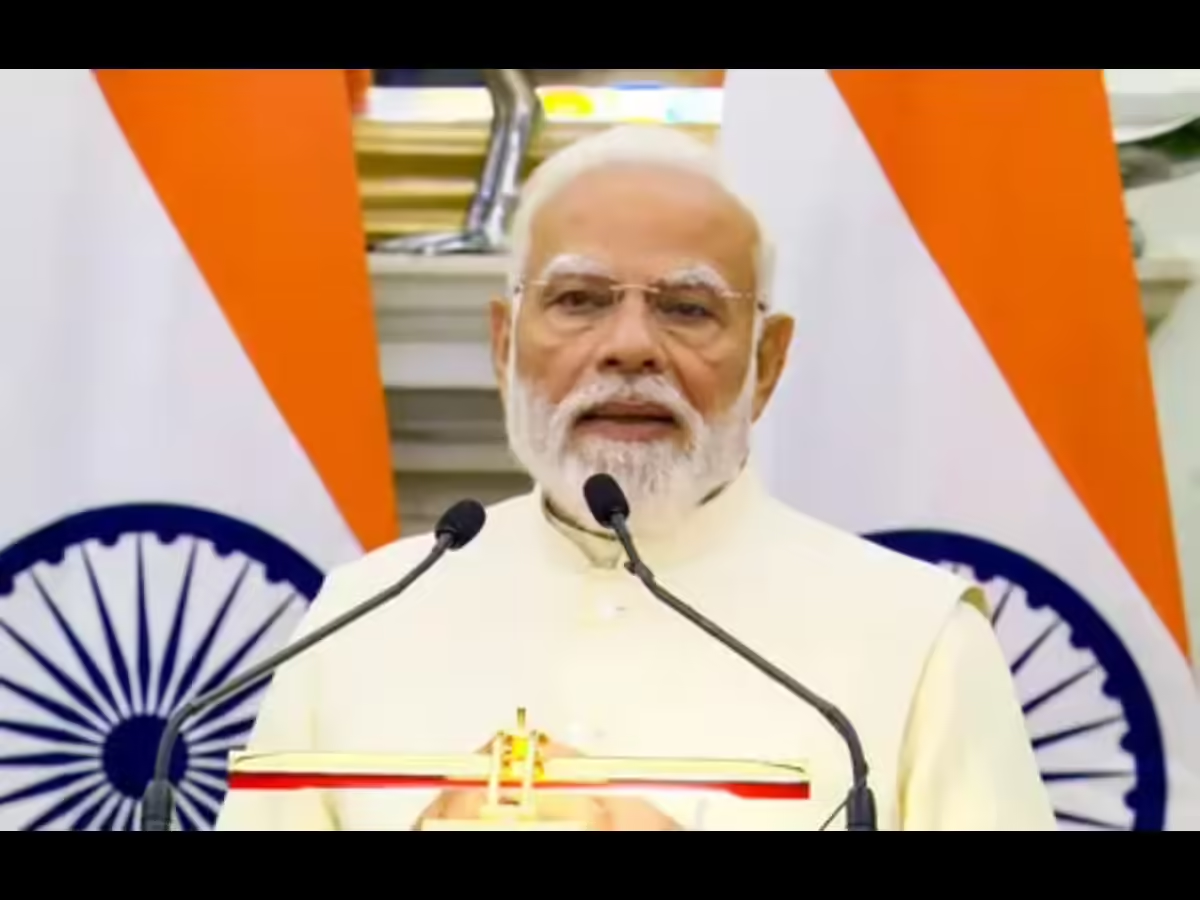
PM Modi shares Sanskrit Subhashitam on true knowledge in a message that highlighted the importance of wisdom, learning, and inner transformation in human life. Narendra Modi shared the Sanskrit verse on social media, emphasizing how true knowledge has the power to guide individuals toward better thinking, character, and decision-making.
The message attracted attention from scholars, students, and citizens interested in Indian philosophy and cultural values.
What is a Sanskrit Subhashitam?
A Subhashitam is a short Sanskrit verse that conveys moral values, wisdom, ethics, and life lessons in a concise and meaningful manner.
Importance of Subhashitams
- Promote positive thinking and ethical values
- Preserve India’s ancient literary traditions
- Offer practical guidance for daily life
- Inspire personal growth and self-discipline
For centuries, Sanskrit Subhashitams have been part of India’s intellectual and spiritual heritage.
PM Modi’s Message on True Knowledge
Through the shared Subhashitam, Narendra Modi highlighted that true knowledge is not limited to academic learning but also shapes character, wisdom, and humanity.
Main Theme of the Message
The verse focused on how genuine knowledge:
- Removes ignorance
- Improves understanding and wisdom
- Encourages humility and discipline
- Transforms society positively
The Prime Minister often shares Sanskrit verses and inspirational messages connected to Indian culture and philosophy.
Why Such Messages Matter
Messages based on ancient Indian wisdom continue to resonate with people across generations.
Connecting Youth with Cultural Heritage
Sharing Sanskrit literature on digital platforms helps younger generations become familiar with India’s intellectual traditions.
Promoting Positive Values
Subhashitams encourage qualities such as honesty, patience, compassion, and wisdom.
Encouraging Lifelong Learning
The message also highlights the idea that learning is a continuous process that shapes both individuals and society.
India’s Rich Sanskrit Heritage
Sanskrit Literature is considered one of the oldest and most respected literary traditions in the world.
Contributions of Sanskrit Literature
Philosophy and Knowledge
Ancient texts discuss science, ethics, governance, spirituality, and mathematics.
Moral Education
Subhashitams and scriptures have long been used to teach values and discipline.
Cultural Identity
Sanskrit remains deeply connected to India’s cultural and spiritual traditions.
India has increasingly focused on promoting classical languages and traditional knowledge systems in recent years.
Public Response to the PM’s Post
The Prime Minister’s message received appreciation from many social media users and scholars.
Common Reactions Included
- Praise for promoting Indian culture
- Interest in Sanskrit learning among youth
- Discussions around the meaning of true knowledge
- Appreciation for value-based messages in public life
Such posts often encourage broader conversations about education, ethics, and cultural identity.
The Transformative Power of Knowledge
Knowledge has always been viewed as a force that shapes societies and civilizations.
How True Knowledge Creates Change
- Builds awareness and understanding
- Helps people make informed decisions
- Encourages innovation and progress
- Promotes peace and harmony in society
Ancient Indian teachings consistently emphasize that wisdom should be used for the welfare of humanity.
Conclusion
The moment where PM Modi shares Sanskrit Subhashitam on true knowledge reflects the continued relevance of India’s ancient wisdom traditions in modern society. By highlighting the transformative power of knowledge, the message encourages individuals to focus not only on education but also on values, understanding, and self-improvement.
As digital platforms increasingly become spaces for cultural exchange, such messages continue to strengthen awareness of India’s rich intellectual heritage.