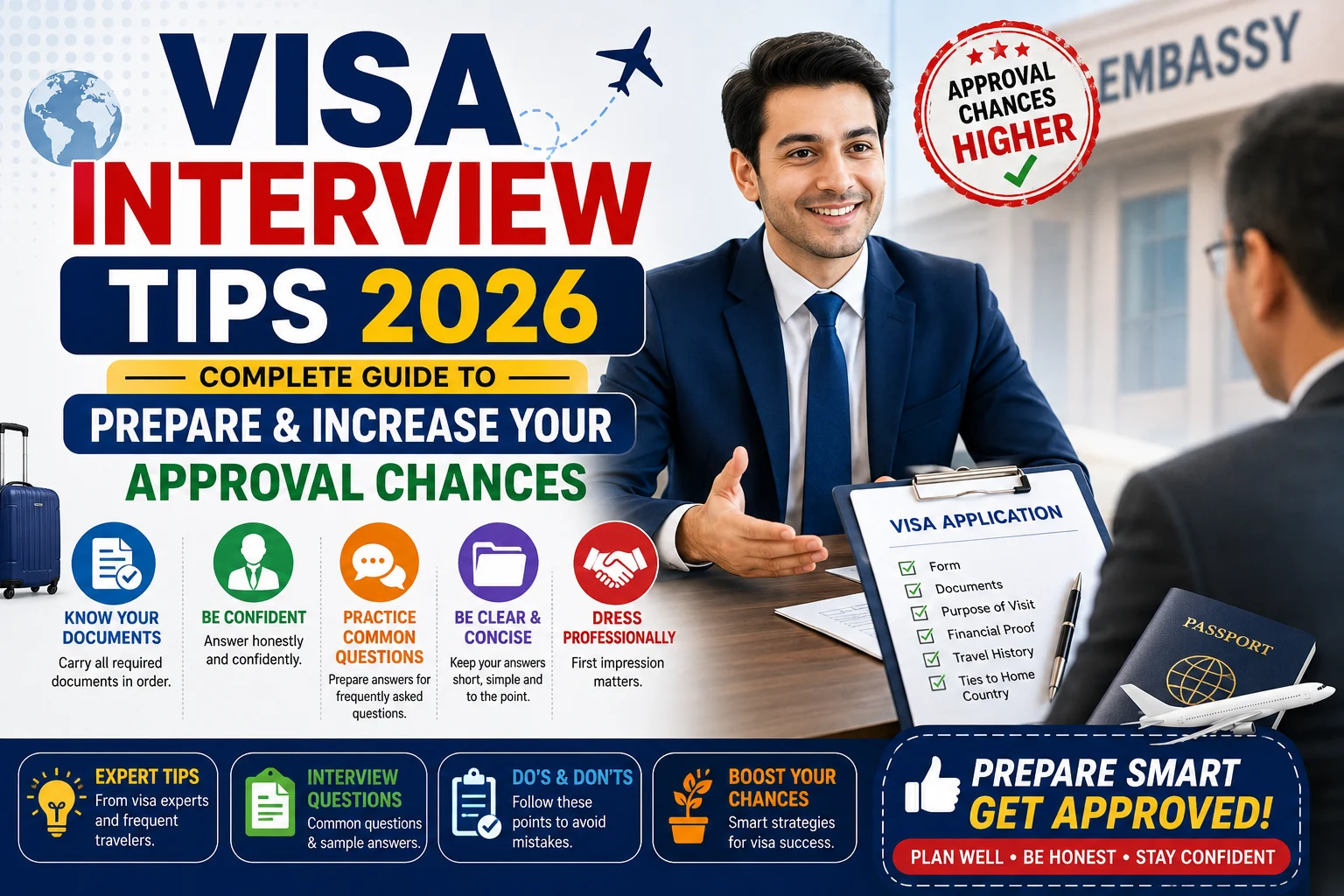
A visa interview is one of the most important steps in obtaining a visa for countries such as the United States, Canada, the United Kingdom, Australia, Schengen countries, and others. During the interview, a consular or visa officer assesses your eligibility, travel purpose, financial capability, and intention to return to your home country.
Preparing well for the interview can significantly improve your confidence and reduce the chances of visa refusal. This guide covers the best visa interview tips, required documents, common questions, preparation strategies, and mistakes to avoid.
What is a Visa Interview?
A visa interview is a face-to-face interaction between a visa applicant and a visa officer. The officer verifies your documents, asks questions about your travel plans, and determines whether you meet the requirements for the requested visa category.
The interview helps confirm:
- Identity
- Purpose of travel
- Financial stability
- Travel history
- Ties to your home country
- Eligibility under the immigration laws of the destination country
Visa Interview 2026 Highlights
| Particular | Details |
|---|---|
| Process | Visa Interview |
| Conducted By | Embassy or Consulate |
| Mode | In-Person |
| Purpose | Visa Eligibility Verification |
| Applicable For | Tourist, Student, Work, Business & Other Visa Categories |
| Documents Required | Passport, Visa Application, Financial & Supporting Documents |
Essential Visa Interview Tips
1. Know Your Visa Type
Understand the purpose of your visa before attending the interview.
Examples include:
- Tourist Visa
- Student Visa
- Business Visa
- Work Visa
- Family Visa
- Transit Visa
Your answers should match the purpose of the visa you have applied for.
2. Carry Complete Documents
Organize all your documents in a folder.
Common documents include:
- Valid Passport
- Visa Appointment Letter
- Visa Application Confirmation
- Passport-size Photographs
- Bank Statements
- Income Proof
- Employment Letter
- Admission Letter (Student Visa)
- Invitation Letter (if applicable)
- Travel Itinerary
- Hotel Booking (if applicable)
- Return Ticket (if required)
- Travel Insurance (where applicable)
3. Dress Professionally
Wear neat, clean, and formal or smart casual clothes.
You don’t need expensive clothing, but you should appear presentable and confident.
4. Arrive Early
Reach the embassy or visa application center at least 30–45 minutes before your scheduled appointment.
This allows enough time for:
- Security checks
- Document verification
- Queue management
5. Be Honest
Always provide truthful information.
Never:
- Submit fake documents.
- Give false information.
- Hide previous visa refusals.
- Misrepresent your travel purpose.
Providing incorrect information can lead to visa refusal and may affect future applications.
6. Answer Clearly and Briefly
Keep your answers:
- Short
- Accurate
- Relevant
Avoid giving unnecessary details unless the officer asks for them.
7. Maintain Confidence
During the interview:
- Maintain eye contact.
- Speak politely.
- Stay calm.
- Listen carefully before answering.
Confidence should come from preparation, not memorized responses.
Common Visa Interview Questions
Visa officers may ask questions such as:
Personal Information
- Tell me about yourself.
- Where do you live?
- What do you do?
Travel Purpose
- Why do you want to visit our country?
- How long will you stay?
- Which places will you visit?
Financial Questions
- Who is sponsoring your trip?
- How will you pay for your travel?
- What is your monthly income?
Employment Questions
- Where do you work?
- How long have you been employed?
- Will you return to your current job?
Student Visa Questions
- Why did you choose this university?
- Why this course?
- What are your career plans after graduation?
Family Questions
- Do you have relatives in the destination country?
- Are you married?
- Who will stay in your home country?
Documents Checklist
Before leaving for the interview, verify that you have:
- Passport
- Appointment Confirmation
- Visa Application Form
- Passport-size Photographs
- Financial Documents
- Employment Proof
- Educational Documents (if applicable)
- Invitation Letter (if applicable)
- Accommodation Details
- Travel Itinerary
- Supporting Documents for your visa category
Mistakes to Avoid
Avoid these common mistakes:
- Arriving late.
- Giving inconsistent answers.
- Providing false information.
- Carrying incomplete documents.
- Memorizing scripted answers.
- Interrupting the visa officer.
- Arguing during the interview.
- Looking at your phone during the interview.
Tips to Increase Visa Approval Chances
- Apply under the correct visa category.
- Complete the application carefully.
- Carry original documents.
- Show sufficient financial resources.
- Demonstrate strong ties to your home country.
- Explain your travel purpose clearly.
- Maintain confidence and professionalism.
- Follow all embassy instructions.
What Happens After the Interview?
Depending on your application, the visa officer may:
- Approve your visa.
- Request additional documents.
- Place the application under administrative processing.
- Refuse the visa if eligibility requirements are not met.
Processing times vary by country, visa type, and individual circumstances.
Frequently Asked Questions (FAQs)
How long does a visa interview take?
Most visa interviews last between 5 and 15 minutes, although the duration can vary depending on the visa category and individual case.
Should I memorize answers?
No. It is better to understand your application thoroughly and answer naturally rather than memorizing responses.
What should I wear?
Formal or smart casual clothing that is neat and professional is generally appropriate.
Can I carry additional documents?
Yes. Bring all relevant supporting documents, even if they are not specifically requested, as the visa officer may ask to see them.
What if my visa is refused?
A refusal does not always prevent you from applying again. Review the reason for the refusal, address any deficiencies if possible, and follow the embassy’s guidance before submitting a new application.
Conclusion
A successful visa interview depends on preparation, honesty, and confidence. Understanding your application, carrying complete documents, answering questions clearly, and demonstrating genuine travel intentions can improve your chances of visa approval. Since each country has its own visa rules and assessment criteria, always review the latest instructions provided by the relevant embassy or consulate before your interview.