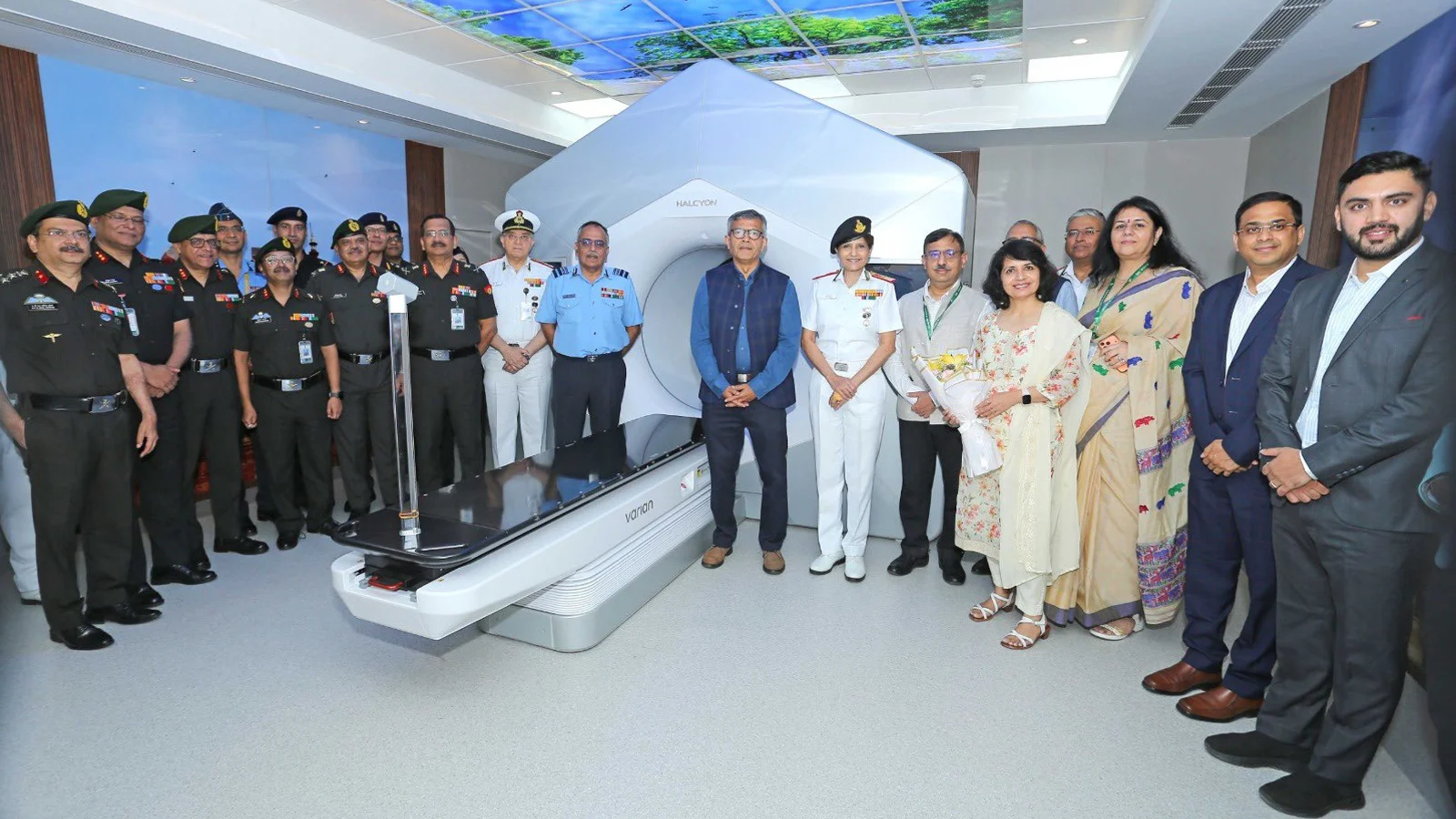
In a major boost to military healthcare infrastructure, Army Hospital (Research & Referral), New Delhi has commissioned a state-of-the-art Ring Gantry-based Linear Accelerator to strengthen advanced cancer treatment services for armed forces personnel, veterans, and their dependents. The modern radiotherapy technology was formally inaugurated in the Department of Radiation Oncology in the presence of Defence Secretary Rajesh Kumar Singh.
The induction of this advanced system marks a significant step toward modernization of oncology care within the Armed Forces Medical Services (AFMS) and is expected to greatly improve access to high-precision radiotherapy for cancer patients.
Advanced Radiotherapy Technology Commissioned
The newly commissioned Linear Accelerator is equipped to deliver several modern radiotherapy techniques, including:
- Volumetric Modulated Arc Therapy (VMAT)
- Intensity-Modulated Radiation Therapy (IMRT)
- Image-Guided Radiation Therapy (IGRT)
- Stereotactic Body Radiation Therapy (SBRT)
- Stereotactic Radiosurgery (SRS)
Medical experts stated that the advanced system enables highly precise targeting of tumors while minimizing radiation exposure to surrounding healthy tissues. This significantly improves:
- Treatment accuracy
- Patient safety
- Recovery outcomes
- Overall quality of cancer care
Major Upgrade for Armed Forces Medical Services
Officials described the new technology as a substantial upgrade over the hospital’s previous radiotherapy equipment, which has now been decommissioned. The induction reflects the broader modernization drive underway across oncology centers under the Armed Forces Medical Services.
The Defence Ministry stated that other military oncology facilities are also being upgraded in a phased manner to improve cancer treatment capacity across the defence healthcare system.
Improved Cancer Care for Defence Personnel
Army Hospital (R&R) is among India’s premier military medical institutions and handles a significant patient load from across the country. The advanced radiotherapy system is expected to:
- Increase in-house treatment capacity
- Reduce waiting time for patients
- Improve precision-based cancer therapies
- Strengthen tertiary oncology care services
The facility will primarily benefit:
- Serving armed forces personnel
- Retired veterans
- Dependents of defence personnel
Push Toward Modern Oncology Infrastructure
The commissioning aligns with the government’s broader push toward strengthening healthcare infrastructure through modern technology adoption.
Earlier this year, Defence Minister Rajnath Singh had also laid foundation stones for dedicated oncology infrastructure and advanced medical facilities at Army Hospital (R&R) as part of the Army Medical Corps modernization initiative.
Healthcare experts say advanced radiotherapy systems play a critical role in modern cancer treatment because they allow:
- Personalized therapy planning
- Better tumor precision
- Reduced side effects
- Faster treatment delivery
Growing Importance of Advanced Radiotherapy
Cancer specialists globally emphasize that modern radiation therapy has become an essential component in treating:
- Breast cancer
- Lung cancer
- Head and neck cancers
- Brain tumors
- Prostate cancer
Studies suggest advanced technologies like IMRT and IGRT significantly improve precision and reduce damage to nearby healthy organs.
The adoption of such technologies within military healthcare systems is expected to strengthen specialized treatment access for defence families.
Senior Officials Present
The commissioning ceremony was attended by:
- Defence Secretary Rajesh Kumar Singh
- DG AFMS Surgeon Vice Admiral Arti Sarin
- Commandant of Army Hospital (R&R) Lieutenant General Avinash Das
- Other senior defence and medical officials
Officials highlighted the importance of continued modernization in military medicine to meet future healthcare challenges.
Conclusion
The commissioning of the advanced Ring Gantry-based Linear Accelerator at Army Hospital (R&R) marks a major milestone in strengthening cancer treatment services within India’s defence healthcare system.
With cutting-edge radiotherapy capabilities and improved treatment precision, the new technology is expected to significantly enhance cancer care access and outcomes for armed forces personnel, veterans, and their families.