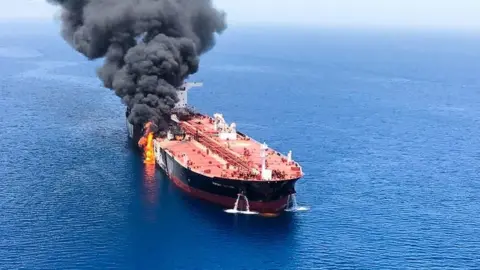
The Gulf of Oman Tanker Interception has increased tensions across West Asia and global shipping routes. United States military forces intercepted an Iranian-flagged oil tanker near the Gulf of Oman during a maritime operation.
According to US Central Command, the tanker ignored repeated warnings from naval forces. American officials stated that the vessel attempted to move toward restricted maritime zones. The interception took place in international waters near strategic shipping routes.
The incident has drawn global attention because the Gulf of Oman connects major oil transportation channels. Commercial ships carrying fuel and goods frequently pass through this region. Any disruption can impact global energy supplies and shipping markets.
The Gulf of Oman Tanker Interception also raised concerns about maritime security near the Strait of Hormuz. This narrow waterway handles a large share of international crude oil exports. Countries worldwide closely monitor developments in this sensitive area.
US military officials stated that naval forces acted to stop possible violations of regional maritime restrictions. Fighter aircraft and naval units participated in the operation. Authorities later confirmed that the tanker stopped movement after the interception.
The incident comes during rising tensions between the United States and Iran. Both countries continue diplomatic discussions regarding regional security and military activities. However, recent confrontations have created uncertainty across West Asia.
Security experts believe the tanker interception could affect ongoing diplomatic negotiations. Increased military activity often raises risks for commercial shipping and regional stability. Global markets also react quickly to tensions near energy corridors.
The Gulf of Oman Tanker Interception highlights the strategic importance of maritime security operations. Several countries have strengthened naval presence in the Gulf region during recent months. International forces continue to patrol key trade routes.
Energy analysts warn that prolonged tensions may increase oil price volatility. Shipping companies already face rising insurance and transportation costs. Many businesses now monitor regional developments more carefully.
The Gulf of Oman remains one of the world’s most important maritime zones. The route connects the Arabian Sea with the Strait of Hormuz and Persian Gulf. Millions of barrels of crude oil move through these waters daily.
Defence experts expect stronger naval coordination among allied nations in the coming weeks. Governments aim to protect shipping lanes and prevent regional escalation. Maritime security operations may continue as tensions remain high.
The Gulf of Oman Tanker Interception also reflects growing geopolitical competition in West Asia. Nations continue to strengthen military readiness across critical trade corridors. Regional stability now depends heavily on diplomatic efforts and strategic restraint.
Global attention remains focused on future developments between the United States and Iran. Any further escalation could affect international trade, energy security, and economic stability worldwide.