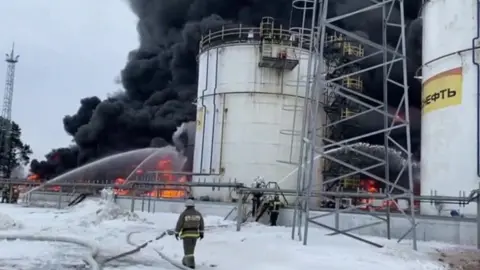
Ukrainian Drones Strike Key Russian Energy Infrastructure
Ukraine launched a fresh wave of overnight drone attacks targeting critical Russian energy facilities, including an oil pipeline pumping station, an oil refinery, and a fuel depot across multiple Russian regions. The strikes are being viewed as part of Kyiv’s continuing strategy to disrupt Russia’s energy infrastructure and logistics network deep inside its territory.
According to Ukrainian military officials, one of the primary targets was the Saratov oil refinery on the Volga River, where a large fire reportedly broke out following the attack. Additional strikes targeted a major pipeline pumping station in the Kirov region and a fuel storage facility in Russia’s Rostov region.
Saratov Refinery Among Major Targets
Ukraine’s General Staff stated that the Saratov refinery, located hundreds of kilometers from the frontline, was successfully struck during the operation. Reports indicated that the attack triggered a significant fire, with local authorities confirming damage to infrastructure in the region.
The refinery is considered an important part of Russia’s fuel-processing network and plays a role in supplying energy products to both civilian and industrial sectors.
Military analysts note that repeated attacks on oil infrastructure can affect fuel distribution and increase pressure on Russia’s wartime logistics system.
Pipeline Pumping Station Hit Deep Inside Russia
Another significant target was the Lazarevo oil pumping station in Russia’s Kirov region, located far from active combat zones. Ukrainian officials described the facility as a key node in Russia’s oil transportation network.
The strike demonstrates Ukraine’s growing ability to conduct long-range drone operations against strategic infrastructure located deep within Russian territory.
Experts believe such attacks are intended to reduce Russia’s capacity to transport and export oil, a critical source of revenue for Moscow.
Fuel Depot Fire Reported in Rostov Region
In the Rostov region, which borders parts of eastern Ukraine, authorities reported a major fire at a fuel depot in the town of Matveyev Kurgan after it was struck by drones. Ukrainian officials later confirmed responsibility for the attack.
Images and reports from the area showed large flames and thick smoke rising from the facility, highlighting the growing intensity of Ukraine’s campaign against Russian energy assets.
The Rostov region has become a frequent target due to its strategic importance in supporting Russian military operations near the front lines.
Russia Claims to Have Intercepted Hundreds of Drones
Russia’s Defense Ministry stated that its air defense systems intercepted a large number of Ukrainian drones during the overnight assault. Russian officials claimed that hundreds of drones were launched toward multiple regions, with many being destroyed before reaching their intended targets.
Despite these claims, several strikes reportedly penetrated defenses and caused fires or infrastructure damage.
Regional governors in Belgorod and Voronezh also reported damage from drone attacks, with injuries reported in some areas.
Part of Ukraine’s Broader Energy Infrastructure Strategy
The latest attacks are part of a broader Ukrainian strategy aimed at targeting Russia’s oil production, refining, storage, and transportation infrastructure. Over the past several months, Kyiv has significantly expanded its long-range drone capabilities, allowing it to strike strategic targets located hundreds or even thousands of kilometers from the border.
Ukrainian President Volodymyr Zelenskyy has previously argued that attacks on energy facilities reduce Russia’s ability to finance military operations and bring the consequences of war closer to Russian territory.
Escalation in the Russia-Ukraine Conflict
The drone strikes occurred as both Russia and Ukraine continue to intensify aerial attacks. Ukrainian officials reported intercepting hundreds of Russian drones overnight, while Russia reported widespread Ukrainian drone activity across several regions.
The ongoing exchange of long-range strikes reflects the increasingly technological nature of the conflict, with unmanned systems playing a growing role in military operations.
Security experts believe attacks on energy infrastructure are likely to remain a key feature of the war in the coming months.
Conclusion
Ukraine’s latest drone offensive against a Russian pipeline pumping station, oil refinery, and fuel depot highlights its expanding capability to strike strategic targets far beyond the battlefield. The attacks underscore Kyiv’s continued effort to disrupt Russia’s energy network and increase pressure on Moscow’s wartime economy.
As both sides intensify drone warfare and target critical infrastructure, the conflict continues to evolve, with energy facilities emerging as some of the most important targets in the ongoing Russia-Ukraine war.