Fresh Escalation Rocks Middle East
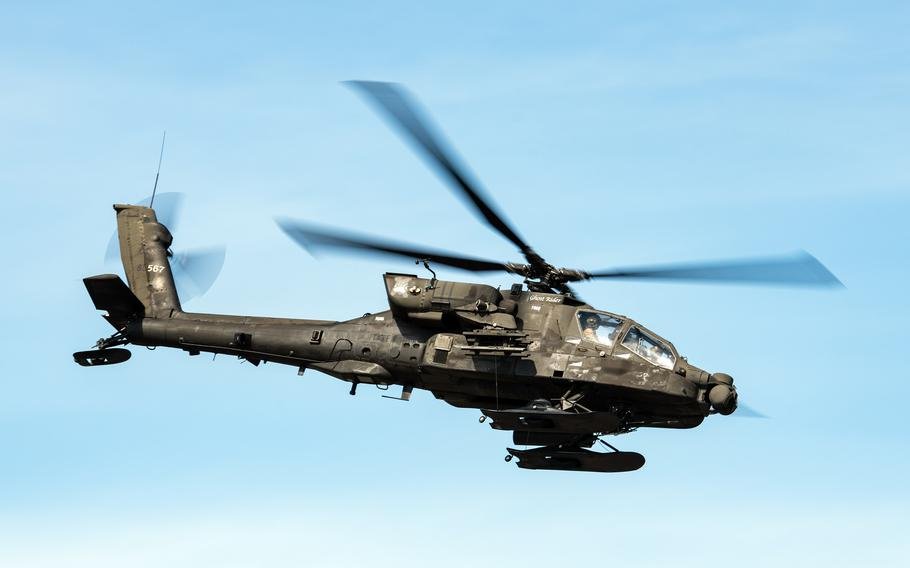
The United States has launched military strikes against Iran following the downing of a US Army AH-64 Apache helicopter near the Strait of Hormuz off the coast of Oman. The incident marks a major escalation in already fragile relations between Washington and Tehran and has raised fresh concerns about regional stability.
Moreover, President Donald Trump blamed Iran for the helicopter’s loss and authorized what US officials described as a “proportional” military response targeting Iranian military infrastructure.
Apache Helicopter Brought Down Near Hormuz
According to US military officials, the Apache helicopter was brought down during operations near the Strait of Hormuz, a strategically critical waterway for global energy supplies. The two crew members aboard the aircraft were successfully rescued and reported to be in stable condition.
Furthermore, reports indicate that advanced unmanned maritime systems played a crucial role in the rescue operation, which was completed within hours of the incident.
US Responds With Military Strikes
Following the helicopter incident, US forces carried out strikes against Iranian targets, including radar and air-defense installations near the Strait of Hormuz and coastal locations in southern Iran. Explosions were reported in areas including Sirik, Minab, Bandar Abbas, and Qeshm Island.
Additionally, US Central Command described the operation as a defensive and proportionate response to what it called Iranian aggression.
Iran Launches Retaliatory Attacks
Iran responded swiftly, launching missiles and drones toward US military facilities in several Gulf countries, including Bahrain, Kuwait, and Jordan. Regional defense systems reportedly intercepted most incoming threats, limiting damage and casualties.
Moreover, Iranian officials warned that any further military action by Washington could trigger additional retaliation and deepen the conflict.
Peace Talks Face New Challenges
The latest confrontation comes despite ongoing diplomatic efforts aimed at reaching a broader agreement between the United States and Iran. President Trump has repeatedly stated that negotiations are close to producing a deal and has expressed optimism about a potential breakthrough.
However, the exchange of military strikes has cast uncertainty over those efforts and raised concerns about whether diplomacy can prevent a wider regional conflict.
Strategic Importance of the Strait of Hormuz
The Strait of Hormuz remains one of the world’s most critical maritime chokepoints, handling a substantial share of global oil and gas shipments. Any escalation in the region has immediate implications for international energy markets, shipping routes, and global economic stability.
Furthermore, continued military activity around the waterway could affect commercial shipping and increase security risks for vessels operating in the Gulf.
International Community Watches Closely
Governments across the world are closely monitoring developments as fears grow that the confrontation could expand beyond a limited exchange. International observers have urged restraint and renewed diplomatic engagement to prevent further escalation.
Consequently, the coming days are expected to be crucial in determining whether the crisis moves toward de-escalation or a broader military confrontation.
Conclusion
The US strikes on Iran following the downing of an Apache helicopter near Oman represent one of the most serious escalations in US-Iran tensions in recent months. While both sides have demonstrated military resolve, the incident has also placed ongoing diplomatic efforts under significant strain.
Moreover, with retaliatory attacks already underway and the Strait of Hormuz remaining a focal point of regional tensions, global attention is firmly fixed on whether diplomacy can prevent the crisis from escalating further.