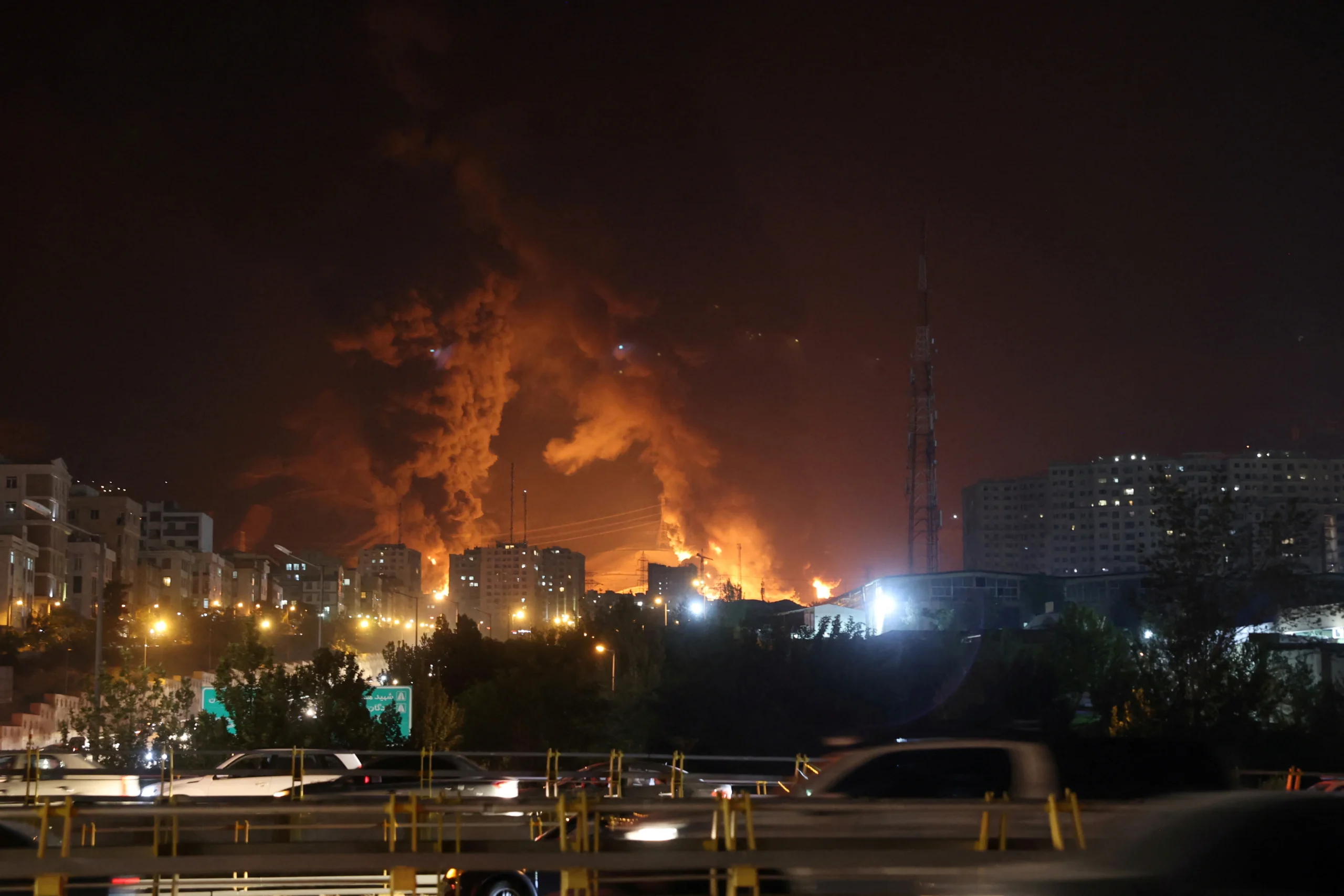
The United States has launched another round of military strikes against multiple targets in Iran, marking a significant escalation in the ongoing confrontation between Washington and Tehran. According to US Central Command (CENTCOM), the strikes were carried out in response to what it described as Iran’s “continued aggression” and targeted military surveillance systems, air-defense infrastructure, and communication facilities.
Moreover, the latest operation represents the second consecutive wave of US attacks, underscoring the growing volatility across West Asia.
Escalation Follows Earlier Military Confrontation
The renewed strikes come days after a US Army Apache helicopter was reportedly downed near the Strait of Hormuz, an incident that triggered a series of retaliatory actions by both countries. Washington has blamed Iran for the attack and has repeatedly stated that it will respond decisively to threats against American personnel and assets.
Furthermore, President Donald Trump has accused Tehran of delaying negotiations and warned that additional military action could follow if Iran does not alter its course.
Iran Responds With Regional Strikes
In response to the latest US military action, Iran’s Islamic Revolutionary Guard Corps (IRGC) claimed responsibility for attacks targeting facilities hosting US forces in Bahrain, Kuwait, and Jordan. Regional authorities activated air-defense systems and emergency protocols as missile and drone threats emerged across the Gulf.
Additionally, Bahrain reportedly sounded missile warning sirens and advised residents to seek shelter as tensions intensified.
As a result, fears of a wider regional conflict have increased substantially.
Strait of Hormuz Remains a Flashpoint
The strategic Strait of Hormuz continues to remain at the center of the crisis. Iran has reportedly threatened restrictions on maritime traffic through the waterway, one of the world’s most important energy transit routes.
Moreover, any disruption to shipping through the strait could have serious implications for global oil supplies and international trade.
Consequently, governments and energy markets around the world are closely monitoring developments.
Oil Markets React to Rising Uncertainty
Global oil prices moved higher as traders assessed the implications of the escalating conflict. Concerns about potential supply disruptions through the Strait of Hormuz have contributed to increased volatility in energy markets.
Furthermore, analysts have warned that a prolonged conflict could place additional pressure on global energy supplies and increase inflationary risks for many economies.
Diplomatic Efforts Face Growing Challenges
The latest military exchanges have cast doubt over ongoing diplomatic efforts aimed at securing a broader agreement between the United States and Iran. Although both sides have previously indicated a willingness to negotiate, the continuing strikes and retaliatory attacks have complicated prospects for a breakthrough.
Moreover, disagreements over sanctions, regional security arrangements, and Iran’s nuclear programme continue to remain major obstacles in the talks.
Regional Stability Under Threat
Security experts warn that continued military exchanges could draw additional regional actors into the conflict, increasing the risk of broader instability across West Asia. The situation has already heightened concerns among Gulf nations, many of which host American military facilities.
Furthermore, international observers have urged restraint and renewed diplomatic engagement to prevent the crisis from spiraling further out of control.
Conclusion
The latest US strikes on Iran mark another dangerous chapter in the escalating confrontation between the two countries. With retaliatory attacks spreading across the Gulf, diplomatic negotiations under strain, and concerns mounting over the security of the Strait of Hormuz, the crisis is rapidly becoming one of the most significant geopolitical challenges facing the region.
Moreover, the coming days are expected to be critical in determining whether the situation moves toward de-escalation through diplomacy or intensifies into a broader regional conflict.